Categories
DIY Projects

Where to Place Kitchen Cabinet Handles: Top Placement Tips for a Functional Kitchen

  • Proper placement improves functionality: Handles that are too high, too low, or inconsistent can make opening cabinets and drawers awkward or tiring.

  • Follow standard heights and orientation: Vertical handles work best on doors, horizontal on drawers, and measurements around 2.5–3 inches from edges create natural, comfortable hand movements.

  • Maintain symmetry for a polished look: Use careful measuring, templates, and consistent spacing to ensure handles align across all cabinets and drawers.

  • Consider ergonomics: Account for dominant hand use, drawer weight, corner collisions, child accessibility, and overall kitchen workflow for comfortable, practical placement.

  • Avoid common mistakes: Inconsistent heights, placement too close to edges, ignoring drawer sizes, and blocking appliances can all reduce functionality and aesthetics.

  • Use the right tools for installation: A tape measure, template, level, and proper drill bits ensure accurate and professional handle placement, making DIY installation much easier.

When it comes to kitchen design, handles might seem like a small detail—but they play a huge role in both the look and functionality of your space. Choosing the right handles is one thing, but knowing where to place kitchen cabinet handles can make all the difference. Proper placement ensures your kitchen is not only stylish but also practical and easy to use every day.

In this article, we’ll cover top placement tips, common mistakes to avoid, and guidelines for a kitchen that works for you.

Why Does Handle Placement Matter?

woman opening a black kitchen cabinet door with a gold handle

Many homeowners focus on cabinet style, color, and hardware finish, but the placement of handles can affect how comfortable and efficient your kitchen feels. Handles that are too high, too low, or inconsistently positioned can make opening drawers and cabinets awkward and tiring.

Good handle placement helps you:

  • Reach cabinets and drawers comfortably.

  • Maintain a clean and symmetrical look.

  • Avoid accidental bumps or scratches when moving around the kitchen.

  • Improve accessibility for kids, elders, or anyone with mobility issues.

What’s the Standard Height for Cabinet Handles?

A common question is: “Where to place kitchen cabinet handles on doors and drawers?” While there’s no one-size-fits-all rule, there are industry standards to guide you.

Cabinet Doors

  • Base cabinets: Handles are usually placed 2.5 to 3 inches from the top of the door if the handle is vertical, or from the edge if horizontal.

  • Wall cabinets: Handles typically go 2.5 to 3 inches from the bottom edge if vertical.

Drawers

  • Horizontal handles: Centered vertically and placed near the top edge for easy grip.

  • Knobs: Centered horizontally and vertically on smaller drawers.

These measurements create a natural hand movement and prevent strain when reaching for cabinets or drawers repeatedly.

Vertical vs Horizontal Placement: Which Works Best?

When deciding where to place kitchen cabinet handles, you’ll also need to consider orientation: vertical or horizontal.

  • Vertical handles: Usually used on cabinet doors. They make taller doors easier to open and add a modern look.

  • Horizontal handles: Common for drawers. They align with the natural motion of pulling out a drawer.

Tip: If you prefer a consistent look, keep all handles in the same orientation across the kitchen, but don’t sacrifice function for style. For instance, vertical handles on drawers can look unique but may feel awkward to use.

How to Maintain Symmetry Across Your Cabinets

Symmetry matters in design, and your handles should follow a consistent pattern to maintain balance. Here’s how:

  • Measure carefully: Before drilling any holes, use a tape measure to mark precise locations on each cabinet door or drawer. Even a small difference of a few millimeters can throw off the visual balance, so double-check your marks.

  • Use a template: A handle placement template is a simple tool that ensures every handle sits in exactly the same spot. Templates are especially useful for large kitchens or when working with multiple types of cabinets, like tall pantries and standard drawers.

  • Keep consistent spacing: For wider kitchens or longer runs of cabinets, make sure the distance from the edge of the door to the handle, as well as the spacing between handles, is uniform. Consistency creates a clean, professional look and prevents your eye from noticing irregularities.

  • Double-check alignment: Once all handles are marked, step back and visually inspect the cabinets. Sometimes minor adjustments are needed to account for natural variations in wood or drawer fronts.

Even small deviations can make your kitchen look unpolished, so taking the time to measure and double-check placement pays off in the long run.

Tips for Ergonomic Handle Placement

A functional kitchen is all about ease of use. Here are ergonomic tips for where to place kitchen cabinet handles:

  • Think about your dominant hand: Most people naturally reach with their dominant hand, so place handles where they can be pulled smoothly without twisting your wrist. For left-handed households, you may need to adjust placement slightly to make sure all handles feel natural.

  • Consider drawer weight: Heavy drawers filled with pots, pans, or dishes require handles that provide leverage. Longer handles or even double knobs can make it easier to pull out heavy drawers without straining your hands.

  • Avoid corner collisions: Handles shouldn’t hit neighboring cabinets, appliances, or walls when opened. Leave enough clearance so doors swing freely and drawers slide out without obstruction.

  • Child-friendly heights: If children often help in the kitchen, consider installing a few handles at a lower height. This allows kids to participate safely without needing stools or climbing.

  • Smooth workflow: Think about the kitchen workflow—from prep area to stove to sink. Handles should make it easy to access frequently used cabinets without awkward bending or reaching.

Common Mistakes in Handle Placement

Many kitchens suffer from poor handle placement, which can make your space frustrating to use. Avoid these common mistakes:

  • Inconsistent heights: Handles at different heights can look sloppy and make opening doors awkward.

  • Too close to edges: Placing handles too close to corners can cause bumps or make doors harder to open.

  • Ignoring drawer size: Small drawers need smaller knobs; large drawers benefit from longer handles.

  • Overlooking appliances: Make sure handles don’t interfere with fridge, oven, or dishwasher doors.

Creative Ideas for Handle Placement

gray kitchen cabinets with different handles

While function is crucial, there’s room for creativity:

  • Offset placement: Slightly off-center handles can give a contemporary, relaxed look.

  • Mix knobs and handles: Knobs on smaller doors, handles on larger drawers create visual interest.

  • Integrated handles: Recessed or edge handles can streamline modern kitchens.

  • High contrast placement: Dark handles on light cabinets can emphasize style while keeping functionality clear.

How to Place Handles on Specialty Cabinets

Specialty cabinets like tall pantries, corner units, and pull-out shelves need extra consideration.

  • Tall pantry doors: Place handles slightly lower than mid-height for comfortable reach.

  • Corner cabinets: Consider knobs at the far edge or an L-shaped pull to maximize grip.

  • Pull-out shelves: Horizontal handles along the top edge allow smooth operation.

Tools and Tips for Accurate Placement

Accurate placement is easier with the right tools. If you’re planning a DIY project, knowing how to install kitchen cabinet handles correctly is key to getting a professional-looking result. Here’s what you’ll need:

  • Tape measure and pencil for precise marking.

  • Handle placement template to ensure every handle is positioned consistently.

  • Level to make sure handles are perfectly straight.

  • Drill with the proper bit size to avoid splitting the cabinet wood.

Pro tip: Measure twice and drill once. Small misalignments can be frustrating to fix later, so taking the time to mark carefully will save a lot of hassle. Using a template can make this process much quicker and ensures all your handles are uniform across your kitchen.

How Handle Placement Affects Kitchen Aesthetics

Handles aren’t just functional—they’re a key part of your kitchen’s design. Proper placement can:

  • Highlight cabinet lines.

  • Create a visually balanced space.

  • Complement other fixtures like faucets, lighting, and countertops.

Even the right style handle can look awkward if it’s in the wrong spot. Function and form should always go hand-in-hand.

Final Thoughts: Balancing Function and Style

Deciding where to place kitchen cabinet handles is about finding the sweet spot between functionality and design. By following ergonomic guidelines, measuring carefully, and maintaining consistent placement, you can create a kitchen that’s easy to use and visually appealing.

Remember, handles are more than just hardware—they’re a touchpoint for everyday interactions in your kitchen. Thoughtful placement ensures your kitchen works for you, your family, and your lifestyle.

Whether you’re renovating your kitchen or just swapping handles for a fresh look, taking the time to plan placement will pay off in both comfort and style.

Categories
DIY Projects

How to Install Kitchen Cabinet Handles on Drawers, Doors, and Different Cabinet Types

  • Accurate measurements and consistent placement are key to professional-looking handles on drawers, doors, and all cabinet types.

  • Drawers: center handles horizontally and vertically; adjust slightly above center for tall drawers if desired.

  • Doors: upper cabinet handles go near the bottom corner, lower cabinet handles near the top corner for ergonomic reach.

  • Cabinet styles matter: Shaker, slab, inset, and overlay cabinets each have placement nuances that affect alignment and aesthetics.

  • Use tools and jigs: a level, drill guide, or hardware jig ensures straight, even holes and prevents mistakes.

  • Old holes and upgrades: fill with wood filler, use backplates, or strategically reuse holes when converting knobs to handles.

  • Patience and double-checking: test-fit, step back to evaluate alignment, and avoid rushing to ensure a polished, cohesive look.

Installing cabinet handles looks simple until you’re standing in your kitchen with a drill in one hand, a tape measure in the other, and the sudden realization that one crooked hole will haunt you every time you make coffee. The good news is that once you understand the differences between drawers, doors, and cabinet styles, the process becomes straightforward and repeatable.

This guide breaks down exactly how to install kitchen cabinet handles across all the common scenarios you’ll run into, whether you’re upgrading old cabinets or finishing a brand-new kitchen. We’ll cover tools, measurements, placement rules, and cabinet-specific tips so you can work confidently and avoid rookie mistakes.

Tools and Materials You’ll Need Before You Start

Before drilling anything, get your setup right. A clean workspace and the right tools make a massive difference in how accurate and stress-free this project is.

You’ll want:

  • Cabinet handles and included screws

  • Tape measure or ruler

  • Pencil or painter’s tape for marking

  • Drill with appropriate drill bit (usually 3/16″)

  • Level or straight edge

  • Cabinet hardware jig (optional but highly recommended)

  • Masking tape or painter’s tape

  • Scrap wood for backing support

Having everything within arm’s reach prevents rushed measurements and accidental misalignment.

Why Placement Matters More Than the Hardware Itself

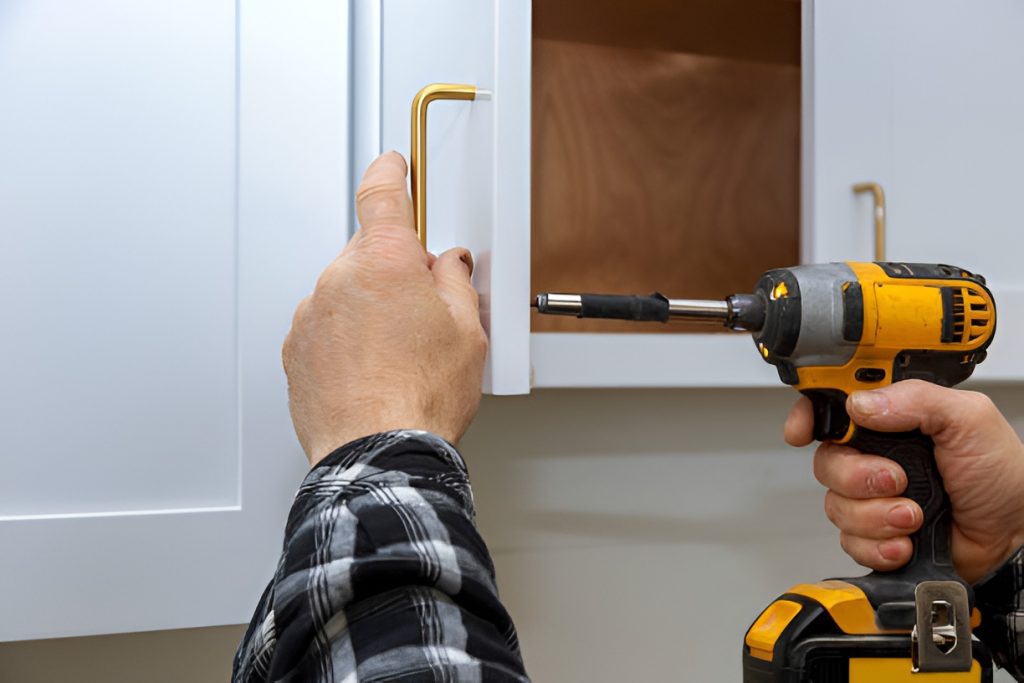
close-up of a man drilling a hole for a new kitchen drawer handle

Most cabinet handles look fine in isolation. What separates a professional-looking kitchen from a DIY-looking one is consistency.

Correct placement:

  • Keeps doors and drawers visually aligned

  • Makes cabinets comfortable to use

  • Prevents unnecessary stress on hinges

  • Improves resale appeal

Once you choose a placement rule, stick with it across the entire kitchen.

How to Install Kitchen Cabinet Handles on Drawers

Drawers are the easiest place to start because they’re symmetrical, predictable, and far more forgiving than cabinet doors. Installing drawer handles first also helps you build confidence before moving on to more complex cabinet types.

Because drawers don’t swing open, placement is mostly about balance and visual alignment rather than reach or clearance.

Where Should Handles Go on Drawers?

The most common and widely accepted rule is simple:

  • Center the handle horizontally on the drawer face

  • Place it vertically centered on the drawer front

This creates a clean, balanced look that works with nearly every kitchen style, from traditional to modern.

For taller drawers, especially deep pot drawers or pantry pull-outs, some homeowners prefer positioning the handle slightly above center. This can feel more ergonomic and visually pleasing in modern kitchens. If you choose this approach, apply it consistently to all drawers of the same size.

Measuring Drawer Handle Placement

Accurate measuring eliminates almost every common drawer-handle mistake. Use this process for consistent results:

  1. Measure the full width of the drawer front.

  2. Divide that measurement by two to locate the horizontal center point.

  3. Measure the height of the drawer and decide whether you want a true center or a slightly higher placement.

  4. Use the handle’s screw spacing to mark both drill holes from the center point outward.

Painter’s tape placed over the drilling area helps prevent splintering, protects the finish, and makes pencil marks easier to see and adjust.

Drilling and Installing Drawer Handles

Once your marks are confirmed:

  • Drill straight through the drawer front, keeping the drill perpendicular

  • Apply light, steady pressure to avoid tear-out

  • Insert screws from inside the drawer and thread them into the handle

  • Tighten screws evenly, alternating between them to keep the handle flush

Before fully tightening, wiggle the handle slightly to ensure it’s straight and centered.

How to Install Kitchen Cabinet Handles on Doors

Cabinet doors require more decision-making than drawers because orientation, reach, and visual flow all matter. A well-placed handle should feel natural to grab and look intentional across the entire kitchen.

Upper Cabinet Doors vs Lower Cabinet Doors

The general rule is based on how people naturally reach:

  • Upper cabinets: handles go near the bottom corner

  • Lower cabinets: handles go near the top corner

This placement reduces strain and keeps handles within comfortable reach during daily use.

Standard Placement Measurements

A widely used and visually reliable standard is:

  • Measure 2½” to 3″ from the bottom edge of upper cabinet doors

  • Measure 2½” to 3″ from the top edge of lower cabinet doors

  • Measure the same distance from the side edge for both

This creates a subtle diagonal alignment that looks intentional and professional when viewed across multiple cabinets.

Marking Door Handles Accurately

Accuracy matters more on doors than anywhere else. A cabinet hardware jig makes this step much easier, but you can still get great results without one:

  • Use a level or straight edge to keep markings aligned

  • Double-check measurements before drilling

  • Mark all cabinet doors before drilling any holes

Batching the measuring phase allows you to catch inconsistencies early and make adjustments before any permanent holes are drilled.

How to Install Kitchen Cabinet Handles on Shaker Cabinets

Shaker cabinets are one of the most popular styles, but their recessed panels introduce additional placement considerations. Where you drill can dramatically affect the finished look.

Where Handles Should Sit on Shaker Cabinets

Handles should align with the cabinet frame rather than floating in the recessed panel. The frame provides structural strength and visual consistency.

Best practice includes:

  • Positioning handles on the vertical frame stile

  • Using identical measurements across doors and drawers

  • Aligning handles with frame edges rather than panel centers

Avoid drilling into the recessed panel unless the cabinet design specifically calls for it, as this can look off-balance and weaken the panel over time.

Common Mistakes with Shaker Cabinets

The most frequent errors include:

  • Installing handles too far into the recessed panel

  • Using inconsistent spacing from the frame edges

  • Applying different placement rules across cabinet sections

Shaker cabinets highlight inconsistencies more than flat-panel designs, so precision is especially important.

How to Install Kitchen Cabinet Handles on Slab Cabinets

kitchen with shaker cabinets

Slab cabinets have flat, uninterrupted surfaces, which gives you more freedom but also removes visual cues that help guide placement.

Placement Rules for Slab Cabinet Doors

Two common placement approaches work well:

  • Centered vertically and horizontally for a clean, minimalist look

  • Edge-aligned for a more modern or industrial style

Both options are valid, but mixing them usually creates visual confusion. Choose one approach and apply it consistently across the kitchen.

Keeping Slab Cabinets Looking Clean

Because slab cabinets show every detail:

  • Use a jig or template to maintain uniformity

  • Measure twice before drilling

  • Avoid eyeballing placements, even if they look “close enough”

Even small misalignments stand out against flat surfaces with no visual breaks.

How to Install Kitchen Cabinet Handles on Inset Cabinets

Inset cabinets sit flush within the cabinet frame, creating a refined, furniture-like appearance. That same precision also makes installation less forgiving.

Special Considerations for Inset Cabinets

When working with inset cabinetry:

  • Door clearance is tighter than with overlay styles

  • Handles must not interfere with adjacent doors or drawers

  • Screws may need to be shorter than standard hardware screws

Always test-fit a handle and open the door fully before drilling all cabinets.

Best Placement Tips

To avoid issues:

  • Follow frame-alignment rules similar to Shaker cabinets

  • Keep handles far enough from edges to prevent rubbing

  • Open and close doors before final tightening

Inset cabinets reward patience and careful planning with a high-end finished look.

How to Install Kitchen Cabinet Handles on Overlay Cabinets

Overlay cabinets are the most common and forgiving style, making them ideal for DIY installations.

Full Overlay vs Partial Overlay

Understanding the difference helps with visual alignment:

  • Full overlay: doors cover most or all of the cabinet frame

  • Partial overlay: a portion of the frame remains visible

While handle placement rules remain similar, full overlay cabinets require extra attention to alignment because the frame isn’t visible to hide inconsistencies.

Maintaining Visual Consistency

To keep everything looking intentional:

  • Use identical measurements for every cabinet

  • Align handles horizontally across rows of cabinets

  • Step back frequently to evaluate the overall look

Small adjustments early in the process prevent noticeable alignment issues once all hardware is installed.

Should You Use a Cabinet Hardware Jig?

If you’re installing more than a few handles, the answer is yes.

Benefits include:

  • Faster installation

  • Consistent hole placement

  • Reduced measuring errors

  • Less mental fatigue

A jig turns a stressful project into a repeatable process.

Drill Bit Size and Screw Length Explained

Most cabinet handles use:

  • 3/16″ drill bits

  • 8-32 screws in varying lengths

Always test on scrap wood or the back of a cabinet before committing.

If screws are too long:

  • Use washers

  • Trim screws with a hacksaw

  • Buy shorter replacements

How to Avoid Crooked or Chipped Holes

Mistakes happen most often during drilling.

Prevent them by:

  • Using painter’s tape over the drill area

  • Drilling slowly and steadily

  • Backing the cabinet with scrap wood

  • Keeping the drill perfectly perpendicular

Rushing this step is the fastest way to ruin a cabinet face.

Installing Handles on Existing Cabinets with Old Holes

Upgrading from knobs to handles is one of the fastest ways to modernize a kitchen, but it often leaves you dealing with old holes that don’t line up with new hardware. How you handle those holes can make the difference between a clean upgrade and a visibly patched cabinet.

The right solution depends on the cabinet material, finish, and how much you want the old hardware to show, if at all.

Common Solutions for Dealing with Old Holes

There are several effective ways to address existing holes, each with its own advantages.

  • Wood filler and touch-up paint: This is the most seamless option for painted or stained wood cabinets. Fill the old hole completely, smooth it flush, and allow it to cure fully before sanding and repainting or staining. Once finished properly, the repair is nearly invisible.

  • Decorative backplates: Backplates sit behind the handle and cover old holes without the need for filling or repainting. They’re especially useful for vintage or decorative kitchens and for homeowners who want a reversible solution.

  • Reusing one existing hole if spacing allows: In some cases, one of the old knob holes can align with one end of the new handle. This reduces drilling and patching, but only works if the alignment looks intentional and symmetrical.

Best Practices When Filling Old Holes

If you choose to fill and redrill:

  • Use a filler appropriate for your cabinet material

  • Slightly overfill to allow for sanding

  • Sand smooth once fully cured

  • Prime if necessary before repainting

Never rush this step. Drilling into filler that hasn’t fully cured can cause cracking or weak screw hold.

Drilling New Holes After Patching

Once repairs are complete:

  • Re-measure handle placement from scratch

  • Use painter’s tape to protect the surface

  • Drill slowly to avoid damaging the repaired area

Taking the time to reset your measurements ensures the new handles look intentional rather than adapted.

Common Installation Mistakes to Watch For

Even careful DIYers make these errors:

  • Mixing placement styles

  • Forgetting to measure from the same reference point

  • Overtightening screws

  • Drilling before confirming alignment

Slowing down is the easiest fix.

Final Alignment Check Before You Finish

Before calling it done:

  • Open and close every door and drawer

  • Check alignment across cabinet rows

  • Tighten loose screws

  • Clean off pencil marks and tape

This final walkthrough ensures everything feels as good as it looks.

When to Consider Hiring a Professional

DIY installation is absolutely doable, but a professional may make sense if:

  • Cabinets are custom or very expensive

  • You’re working with stone or metal fronts

  • The kitchen layout is complex

  • Perfection is critical

Sometimes paying for peace of mind is worth it.

Closing Thoughts

Learning how to install kitchen cabinet handles on drawers, doors, and different cabinet types is less about drilling holes and more about planning, measuring, and consistency. When you approach the project methodically, the result looks polished and intentional rather than improvised.

Take your time, trust your measurements, and don’t be afraid to practice on scrap material. The confidence you gain on the first few handles makes the rest of the kitchen fly by, and the finished result is something you’ll appreciate every single day.

Categories
DIY Projects

Balancing DIY Projects With Professional Help

There’s a certain satisfaction that comes from standing back and admiring something you built with your own hands. Whether it’s a freshly painted room, a new deck railing, or a reimagined laundry space, DIY projects can feel empowering. They promise savings, creativity, and control.

But there’s another side to home improvement that doesn’t always show up in social media tutorials: hidden structural issues, code requirements, long-term performance, and the risk of expensive mistakes. The truth is that most successful renovations aren’t purely DIY or purely contractor-driven. They’re a thoughtful mix of both.

Balancing hands-on work with professional expertise isn’t about ego or fear—it’s about strategy. When you understand where your skills shine and where expert help protects your home, you make better decisions that safeguard your investment and reduce stress.

What follows is a practical guide to finding that balance.

Start With a Realistic Skill and Risk Assessment

Start With a Realistic Skill and Risk Assessment

Before you buy materials or watch a single tutorial, pause and evaluate your actual experience level. Not your optimism. Not your weekend ambition. Your true skill set.

Ask yourself:

  • Have I successfully completed similar projects before?
  • Do I understand the building codes that may apply?
  • Am I comfortable troubleshooting unexpected complications?
  • What happens if I make a mistake?

There’s a huge difference between installing shelving and handling mechanical or structural systems. For example, maintaining your heating and cooling equipment might seem manageable after watching a few online videos, but full-scale HVAC Service often involves refrigerant handling, electrical components, and airflow calibration. Mistakes can reduce efficiency, raise utility bills, or even create safety hazards.

Similarly, tackling a residential roof replacement might appear straightforward when viewed from a ladder. In reality, roofing involves underlayment installation, ventilation balancing, flashing details, and weight distribution. A minor error can lead to slow leaks that go unnoticed for months—until drywall begins to stain or insulation saturates.

The key is understanding risk tiers:

  • Cosmetic changes (paint, trim, hardware) typically carry low risk.
  • Moderate complexity projects (flooring, cabinet installation) require precision but are manageable with preparation.
  • High-risk systems (electrical panels, structural framing, roofing, mechanical systems) demand deeper expertise.

If the worst-case scenario of a project involves injury, code violations, or thousands in water damage, that’s your cue to involve a professional. Confidence is valuable. Overconfidence is expensive.

Define Your Renovation Goals Before Picking Up a Tool

One of the biggest mistakes homeowners make is starting with tasks instead of goals.

You might say, ”I want to redo the bathroom.” But why?

Is it outdated? Inefficient? Hurting resale value? Lacking storage?

Without clarity, DIY projects tend to expand midstream. You replace a vanity, then notice poor lighting. Then you decide the layout doesn’t work. Suddenly, you’re dealing with plumbing moves and structural questions that should have been addressed from the start.

Professionals often begin with a vision conversation. A custom home builder, for instance, doesn’t start framing walls before understanding how you live in a space. They consider traffic flow, long-term maintenance, and energy performance before construction begins.

The same principle applies to smaller renovations. Even when you plan to do some of the labor yourself, consulting a bathroom remodeling contractor for layout advice can prevent costly missteps. A one-hour design review may reveal that moving a fixture six inches saves you thousands in plumbing adjustments.

Before you start:

  1. Write a one-sentence purpose for the renovation.
  2. Identify whether the primary goal is comfort, efficiency, aesthetics, or resale.
  3. Decide which parts require professional precision.

Clarity at the beginning reduces rework later—and protects your budget from emotional, impulse-driven changes.

Budgeting Smart: Where DIY Saves Money and Where It Does Not

DIY often starts with a simple calculation: ”If I don’t pay labor, I save money.”

That’s partially true—but incomplete.

True project cost includes:

  • Tools you may never use again
  • Material waste from errors
  • Disposal fees
  • Time off work
  • The cost of correcting mistakes

Imagine demolishing a kitchen and underestimating debris removal. Renting a roll off dumpster rental container suddenly becomes necessary. That’s an added expense many homeowners forget to factor in.

Or consider a plumbing mishap that leads to a slow leak behind drywall. By the time you notice it, mold remediation and a water restoration service may be required. What began as a cost-saving DIY weekend turns into a five-figure repair.

That doesn’t mean DIY isn’t worthwhile. It simply means budgeting must be realistic.

A balanced approach looks like this:

  • DIY demolition and painting.
  • Hire licensed professionals for plumbing tie-ins and electrical connections.
  • Handle finishing details once inspections pass.

This hybrid model reduces labor costs while minimizing risk. When calculating savings, assign a dollar value to your time. If a professional can complete in two days what might take you three weekends, that efficiency has value too.

Separate Cosmetic Updates From Technical Upgrades

Separate Cosmetic Updates From Technical Upgrades

Not all home projects are created equal. A helpful way to decide what to DIY is by separating cosmetic improvements from technical systems.

Cosmetic updates include:

  • Painting walls
  • Replacing cabinet hardware
  • Installing simple shelving
  • Updating light fixtures (when wiring already exists)

These upgrades generally improve aesthetics without altering structural or mechanical systems.

Technical upgrades, on the other hand, involve performance and safety. For example, pool resurfacing isn’t just about appearance. Surface preparation, bonding agents, curing time, and water chemistry all affect longevity. Improper application can lead to cracking or peeling within a few seasons.

The same goes for complex HVAC Service work. Adjusting ductwork or recalibrating airflow without proper tools can increase energy consumption rather than reduce it.

A helpful rule: if a project affects water, electricity, load-bearing structures, or pressurized systems, think carefully before taking full control.

You might handle painting and trim around a project while leaving technical installation to certified professionals. That division keeps you involved without compromising performance.

Plan Outdoor Improvements With Long-Term Durability in Mind

Outdoor projects are particularly tempting for DIYers. Fresh air, visible progress, and seemingly straightforward materials make them attractive weekend goals.

But exterior work lives in a harsher environment than interior projects. Moisture, expansion, UV exposure, and wind all test installation quality.

Take a vinyl fence. While panel systems are marketed as simple to install, improper post depth or spacing can lead to leaning sections after one winter freeze. Soil conditions matter. So does drainage.

Or consider replacing patio doors. These openings must be precisely flashed and sealed. Even a small gap can allow moisture infiltration, which may not become visible until drywall damage appears months later.

Before committing to DIY exterior work, consider:

  • Local climate conditions
  • Soil stability
  • Drainage slopes
  • Manufacturer warranty requirements

You can often split responsibilities: hire professionals to set structural anchors and weatherproofing, then complete cosmetic trim or finishing yourself.

Outdoor projects reward careful planning more than enthusiasm.

Create a Phased Renovation Strategy to Avoid Overwhelm

Large renovations often spiral because homeowners try to tackle everything at once.

A phased strategy reduces stress and financial strain.

Phase 1: Structural Integrity

Address foundational elements first. If your home needs a residential roof replacement, prioritize that before investing in interior upgrades. Protecting the structure prevents future damage. This phase may also include foundation repairs, correcting drainage issues, or reinforcing framing. It’s not the glamorous part of renovation, but it’s the layer that protects everything else. Skipping ahead to cosmetic upgrades while underlying issues remain unresolved often leads to tearing out new work later—an expensive and frustrating setback.

Phase 2: Systems and Layout

If you’re remodeling a bathroom, consult a bathroom remodeling contractor early to ensure plumbing alignment and ventilation are correct. Even if you plan to install tile yourself, proper rough-in work sets the stage for success. This is also the time to evaluate electrical loads, insulation improvements, and airflow. Making layout adjustments on paper is far cheaper than relocating pipes or wiring after walls are closed. A clear systems plan ensures your DIY contributions enhance, rather than compromise, performance.

Phase 3: Finishes

Paint, hardware, décor, and trim come last. These are ideal DIY tasks once inspections pass and systems function properly. Because finishes are visible and tactile, many homeowners rush toward them—but patience here pays off.

Spacing projects over time also improves decision-making. Living with a layout for a few weeks can reveal adjustments you hadn’t considered. You may discover that a doorway swing feels awkward or that storage placement needs refinement.

Phased renovations protect cash flow, reduce overwhelm, and create natural checkpoints for professional input. They also give you breathing room—time to evaluate progress, reassess priorities, and maintain momentum without burnout.

Use Professionals as Consultants, Not Just Contractors

Use Professionals as Consultants, Not Just Contractors

Hiring a professional doesn’t always mean handing over full control.

Sometimes, the smartest investment is consultation.

For example, meeting with a custom home builder for an hour-long planning session can clarify structural possibilities before you knock down walls. Their experience helps you anticipate hidden framing or load-bearing concerns.

Even something as simple as visiting a benjmain moore store for expert paint guidance can dramatically improve results. Staff can recommend finishes based on lighting conditions, traffic levels, and surface type—insights that go beyond color choice.

Consider hiring professionals for:

  • Design validation
  • Permit guidance
  • Structural review
  • Final inspections before closing walls

Think of them as advisors rather than replacements for your effort. Strategic consultation protects your vision while preserving hands-on involvement.

Know the Red Flags That Signal Stop and Call a Pro

Sometimes the decision is clear. Other times, warning signs appear mid-project.

Red flags include:

  • Persistent moisture smells
  • Visible mold or dark framing
  • Unexpected electrical wiring behind walls
  • Structural sagging
  • Cracks expanding beyond the surface level

If you uncover hidden water damage during demolition, calling a water restoration service immediately can prevent structural rot and indoor air issues.

Similarly, discovering deep cracks in a pool shell during resurfacing preparation may indicate the need for professional pool resurfacing expertise beyond cosmetic patching.

The key is humility. Stopping doesn’t mean failure—it means you value your home’s integrity.

A short delay to consult a professional is almost always cheaper than pushing forward blindly.

Protect Your Investment With Documentation and Warranties

Home improvement isn’t just about appearance—it’s about long-term value.

Keep detailed records of:

  • Receipts
  • Manufacturer warranties
  • Permit approvals
  • Contractor invoices
  • Before-and-after photos

If you install patio doors, retain documentation showing proper flashing and model information. Future buyers appreciate proof of quality work.

Likewise, when adding a vinyl fence, documenting post depth and material specifications supports durability claims during resale.

Professional invoices carry weight with appraisers and buyers. Even if you complete much of the work yourself, consider hiring licensed professionals for critical components that require certification.

Documentation transforms your effort into measurable equity.

Build a Trusted Team Before You Need One

Build a Trusted Team Before You Need One

Emergencies rarely arrive at convenient times.

The middle of a summer heat wave is not the moment to begin researching HVAC Service providers. Nor is the aftermath of a demolition mishap the best time to scramble for a roll off dumpster rental.

Build your network early.

Ask neighbors for recommendations. Read reviews. Verify licenses and insurance. Have contact information saved before problems arise.

It also helps to request estimates in advance for common repairs so you understand typical pricing and response times. When expectations are clear, you can act quickly without second-guessing your choices or overpaying under pressure.

Consider keeping:

  • A short list of preferred contractors
  • Notes on past service experiences

A trusted team reduces panic decisions and rushed hiring. It also fosters long-term relationships, which often lead to better scheduling flexibility and pricing.

Even if you prefer to DIY most projects, knowing who to call creates peace of mind.

Finding Balance Means Protecting Your Home and Your Confidence

DIY projects can be empowering, creative, and cost-effective. Professional help can be precise, protective, and efficient. The most successful homeowners understand that these two approaches are not opposites—they are partners.

When you assess risk honestly, define goals clearly, budget realistically, and remain open to expert input, you create a renovation strategy that strengthens both your home and your confidence.

Balance is not about doing less yourself. It is about choosing wisely where your effort delivers the greatest value—and where expertise ensures your home performs safely and efficiently for years to come.

Categories
Home

3 Warning Signs Your Windows Need Replaced

Knowing when to replace your home windows is crucial for maintaining energy efficiency, comfort, and curb appeal. While some signs are obvious, others may be more subtle and require careful attention. Let’s explore the key warning signs that indicate your windows may need replacing.

1. Drafts Or Unwanted Air

One of the most common indicators that your windows need to be replaced is the presence of drafts. If you feel a breeze coming from your windows even when they’re closed, it’s a clear sign of inefficiency.


Video Source

Over time, seals around windows can degrade, allowing air to pass through and impacting your home’s insulation. It can lead to increased heating and cooling costs, as your HVAC system works harder to maintain a consistent indoor temperature. A local window replacement service can assess the condition of your windows and provide a solution.

Drafts not only affect your wallet; they can also impact indoor comfort. When cold air enters during the winter, your home may feel chilly and less inviting. Conversely, in summer, warm air can seep in, making it difficult for air conditioning to effectively cool your space. This issue often results in uneven temperatures throughout your home, exacerbating discomfort for you and your family. Searching for a local window replacement service nearby can help address these inefficiencies promptly.

Furthermore, consistent drafts can contribute to moisture accumulation around window frames. Moisture can lead to problems like mold growth and wood rot, potentially affecting the structural integrity of your home. Mold is particularly dangerous, posing health risks to inhabitants, including allergies and respiratory issues. Replacing windows not only stops drafts but also protects your home against moisture-related damage. A reliable local window replacement service can advise on the best energy-efficient options available.

2. Visible Wear and Tear

Another indicator that it may be time for window replacement is visible wear and tear. Over the years, windows are exposed to various elements and can sustain considerable damage. Cracks, warping, and peeling paint are clear signs that your windows have seen better days. While some surface-level issues can be addressed temporarily, these signs indicate it might be more cost-effective to replace rather than repair. Consulting with a local window replacement service can provide insights into modern, durable window solutions.

Material degradation, such as rotting wood or rusted metal, further emphasizes the need for replacement. Aging frames and sashes can distort the overall fit and function of your windows, making them difficult to open or close properly. This, in turn, can pose as a security risk, since compromised windows can be easier to breach. Investing in new, high-quality windows improves both the safety of your home and its aesthetic appeal. A local window replacement service can offer a range of secure and aesthetically pleasing options.

In addition to the windows’ aesthetic downfall, operational issues are also a major concern. Windows that are difficult to operate not only diminish your home’s functionality but can also indicate misalignment and faulty components. Sliding windows, for instance, might stick or refuse to slide smoothly, while crank windows might require excessive force. Modern window designs focus on ease of use, and replacing worn-out windows will promote accessibility and convenience. Reach out to a local window replacement service to explore your options.

3. Condensation Buildup

3. Condensation Buildup

Condensation buildup is another warning sign that your windows may need replacement. If you frequently notice fog or moisture between panes, it indicates the seal has failed. This usually happens with double or triple-pane windows, which are designed to trap air or gas for better insulation. A broken seal compromises this insulation, allowing moisture to seep in and obscuring your view. If you encounter this issue regularly, contacting a local window replacement service should be a priority.

Excessive condensation is not just a nuisance; it can be damaging over time. Persistent moisture can lead to issues like wood rot in the window frames, which compromises their stability and functionality. Moreover, it can further contribute to mold and mildew growth, affecting indoor air quality and health. To mitigate these risks, consider investing in new windows that are engineered with advanced sealing technologies. A local window replacement service can recommend products designed to prevent condensation.

In some cases, temporary fixes like resealing or using a window film might be suggested, but these are rarely effective investments in the long run. Such measures are often short-lived and can’t replicate the efficiency lost by aged or damaged windows. It’s essential to understand that window technology has evolved, offering superior performance and lifespan with replacements. Turning to a local window replacement service ensures you gain access to the latest, most efficient window systems available.

Keeping an eye out for these warning signs can save you from increased utility bills and potential structural damage. Investing in timely window replacement not only enhances the comfort and appearance of your home but also its market value. A trusted local window replacement service will ensure that your home is equipped with the best solutions for long-term efficiency and peace of mind.

Categories
Home

Dealing with Major Roofing and Water Damage Issues

Maintaining and improving a home involves far more than cosmetic upgrades. Every decision, from aesthetic design choices to structural and environmental safeguards, plays a role in a property’s safety, comfort, and long-term value. Homeowners today are often tasked with navigating a wide range of specialized services, each requiring careful evaluation and informed decision-making. Whether searching for interior designers near me to transform living spaces, selecting a roofing company to protect the home’s structure, or investing in a mold remediation service to safeguard indoor air quality, the right professional guidance is essential. This article explores key considerations across several critical home improvement and maintenance services, helping homeowners understand what to look for and how to make confident, well-informed choices.

How to Find the Best Interior Designers Near Me

How to Find the Best Interior Designers Near Me

Interior design influences how a home functions, feels, and reflects the personality of its occupants. Choosing the right professional involves balancing creativity, technical expertise, and collaboration.

Evaluating Experience and Portfolio

When searching for interior designers near me, reviewing experience and project history is a critical first step. A well-developed portfolio showcases a designer’s ability to work across different styles, room types, and spatial challenges. Experienced designers demonstrate consistency in quality while adapting to the unique needs of each client. This range often indicates strong problem-solving skills and a deeper understanding of materials, layouts, and lighting.

Checking Credentials and Certifications

Credentials help establish professional credibility and technical competence. Designers with formal training or industry certifications are more likely to understand building codes, accessibility considerations, and safety requirements. While creativity is subjective, technical knowledge ensures that design solutions are both beautiful and functional.

Understanding Design Style Compatibility

A successful design project depends heavily on stylistic alignment. Homeowners should assess whether a designer’s aesthetic sensibility complements their own preferences. Initial consultations provide an opportunity to discuss inspiration, lifestyle needs, and long-term goals, ensuring that expectations are aligned before work begins.

Considering Budget and Costs

Budget transparency is essential for a productive designer-client relationship. Interior designers should clearly explain their fee structure, material costs, and potential variables that may affect pricing. A skilled professional can often suggest alternatives that maintain visual appeal while respecting financial boundaries.

Reading Reviews and Testimonials

Client feedback provides insight into a designer’s communication style, reliability, and ability to manage projects efficiently. Reviews often reveal how well designers handle revisions, deadlines, and collaboration, offering valuable perspective beyond curated portfolio images.

Key Factors in Choosing a Roofing Company

The roof serves as a home’s first line of defense against weather and environmental exposure. Selecting a qualified roofing company is essential to ensuring long-term durability and structural protection.

Assessing Company Reputation and History

A roofing company with an established reputation typically reflects years of consistent workmanship and customer satisfaction. Longevity in the industry often indicates reliability, as reputable companies rely on referrals and repeat business to maintain success.

Comparing Services and Pricing

Roofing services can vary widely, from inspections and repairs to full replacements. Comparing detailed proposals allows homeowners to understand what is included and how pricing aligns with materials, labor, and project scope. A comprehensive estimate often signals thorough planning and professionalism.

Checking Licensing and Insurance

Licensing confirms that a roofing company meets regulatory standards, while insurance protects both workers and homeowners. Verifying these credentials reduces liability and ensures that work is completed in compliance with local requirements.

Importance of Local Presence

Local roofing companies are often more familiar with regional weather patterns, building codes, and common roofing challenges. Their proximity also allows for faster response times and easier access to follow-up services if issues arise.

Availability of Warranty Options

Warranties provide peace of mind by protecting the homeowner’s investment. Understanding both manufacturer and workmanship warranties helps clarify coverage and demonstrates the company’s confidence in its materials and installation practices.

What to Look for in Gutter Contractors

What to Look for in Gutter Contractors

Gutters play a vital role in managing water flow and preventing damage to a home’s foundation and exterior surfaces. Choosing experienced gutter contractors ensures effective drainage and long-term performance.

Assessing Experience and Specialization

Contractors who specialize in gutter systems bring valuable expertise to installation and maintenance. Their experience allows them to identify potential drainage issues and recommend solutions tailored to the property’s layout and roof design.

Materials and Techniques Used

Different gutter materials offer varying benefits in durability, appearance, and maintenance. Knowledgeable gutter contractors explain these options clearly, helping homeowners choose systems that balance performance with aesthetic considerations.

Estimating Costs and Budget Options

Accurate cost estimates allow homeowners to plan effectively and avoid unexpected expenses. Contractors who provide transparent pricing demonstrate professionalism and respect for the client’s financial planning.

Checking for Follow-up Services

Ongoing maintenance and occasional repairs are part of owning a gutter system. Contractors who offer follow-up services add long-term value by helping homeowners preserve system functionality over time.

Client Satisfaction and Reviews

Reviews reveal how contractors manage installations, cleanliness, and communication. Consistently positive feedback often reflects dependable service and attention to detail.

How to Select Reliable Local Roof Repairs

Roof damage can occur unexpectedly and requires timely attention. Choosing professionals who specialize in local roof repairs helps prevent minor issues from escalating into costly structural problems.

Evaluating Response Time and Availability

Prompt response is critical when addressing roof damage. Contractors who prioritize availability demonstrate an understanding of urgency and a commitment to protecting the home from further exposure.

Ensuring Quality of Repair Materials

Durable, high-quality materials are essential for effective repairs. Contractors should explain how repair materials integrate with existing roofing systems and why specific options are recommended.

Understanding Repair vs. Replacement

Not all roof issues require full replacement. Reputable providers of local roof repairs carefully assess whether targeted repairs can resolve the problem or if replacement offers better long-term value.

Checking for Licenses and Insurances

Licensing and insurance remain essential even for smaller repair projects. These credentials protect homeowners and ensure that repairs meet professional standards.

Analyzing Service Guarantees

Service guarantees reflect a contractor’s confidence in their work. Understanding the scope of these guarantees provides reassurance that repairs will perform as expected.

Residential Trusses: Key Considerations

Residential trusses form the structural backbone of a home’s roof system. Selecting appropriate truss designs ensures stability, efficiency, and long-term performance.

Understanding Truss Types and Uses

Different residential trusses serve specific architectural and structural functions. Familiarity with common designs helps homeowners and builders choose solutions that support roof loads while accommodating interior layouts.

Considering Load-Bearing Capabilities

Load-bearing requirements vary based on roof design, climate conditions, and building size. Proper evaluation ensures that trusses can support expected stresses without compromising safety.

Importance of Custom Design Options

Custom-designed trusses allow for greater flexibility in architectural planning. Tailored solutions can accommodate unique layouts, vaulted ceilings, or specific aesthetic goals.

Selecting Materials for Durability

Material selection directly affects truss longevity and performance. High-quality materials resist warping, moisture, and structural fatigue, contributing to long-term reliability.

Estimating Costs and Installation Time

Clear cost estimates and installation timelines help homeowners plan construction or renovation projects efficiently. Accurate projections reduce delays and unexpected expenses.

How to Choose the Right Siding Contractors

How to Choose the Right Siding Contractors

Siding protects a home’s exterior while contributing significantly to its visual appeal. Selecting skilled siding contractors ensures proper installation and lasting performance.

Evaluating Material Choices and Benefits

Different siding materials offer varying levels of durability, insulation, and maintenance requirements. Contractors who explain these differences help homeowners make informed decisions based on climate and lifestyle needs.

Comparing Cost Estimates

Detailed cost comparisons provide clarity and help homeowners assess value. Transparent estimates often indicate a contractor’s commitment to professionalism.

Checking Installation Techniques

Proper installation is essential for siding performance. Experienced siding contractors follow best practices that prevent moisture intrusion and improve energy efficiency.

Reviewing Contractor Experience

Experience across multiple projects and materials demonstrates adaptability and technical competence. Contractors with a strong track record are more likely to deliver consistent results.

Understanding Maintenance Needs

Siding maintenance requirements vary by material. Contractors who discuss long-term care help homeowners preserve appearance and functionality.

The Essentials of Hiring Hardscaping Contracting Services

Outdoor living spaces enhance usability and property value when designed and installed effectively. Hardscaping contracting services focus on durable exterior features such as patios, walkways, and retaining walls.

Overview of Design and Materials Used

Effective hardscaping balances aesthetics with durability. Contractors who understand material properties can recommend designs that complement the home while withstanding environmental conditions.

Evaluating Project Scope and Cost

Clear definitions of project scope and cost help homeowners avoid misunderstandings. Detailed proposals reflect thoughtful planning and professionalism.

Understanding Installation Timelines

Installation timelines affect overall project coordination. Contractors who communicate realistic schedules help homeowners plan around construction activity.

Checking Previous Client References

References provide insight into a contractor’s reliability and craftsmanship. Past projects often demonstrate how well designs age over time.

Maintenance and Upkeep Services

Ongoing maintenance preserves the appearance and functionality of hardscaped areas. Contractors who offer guidance on upkeep add long-term value.

Steps for Effective Mold Removal

Mold growth poses risks to both property and health. Proper mold removal requires careful assessment and controlled remediation techniques.

Identifying Mold Types

Different mold types present varying levels of risk. Accurate identification helps determine the appropriate removal approach.

Assessing Environment and Extent

Understanding moisture sources and affected areas ensures comprehensive mold removal. Thorough assessments prevent incomplete treatment.

Safe Removal Techniques

Effective mold removal relies on containment and proper cleaning methods. Safety protocols protect occupants and prevent cross-contamination.

Preventing Recurrence

Addressing underlying moisture issues is essential for preventing mold from returning. Preventative measures support long-term indoor air quality.

Professional vs. DIY Approaches

While minor issues may be manageable, professional intervention ensures thorough removal and reduces health risks associated with exposure.

The Importance of Mold Remediation Service

Beyond surface cleaning, a mold remediation service addresses underlying causes and long-term prevention.

Understanding Health Implications

Mold exposure can affect respiratory health and overall well-being. Professional remediation prioritizes occupant safety through comprehensive treatment.

Evaluating Remediation Techniques

Advanced remediation techniques target both visible mold and airborne spores. Effective strategies restore healthy indoor environments.

Long-term Monitoring and Maintenance

Ongoing monitoring ensures that remediation efforts remain effective. Maintenance plans help prevent future growth.

Cost and Investment Considerations

While remediation represents an investment, it protects property value and occupant health. Understanding costs helps homeowners plan responsibly.

Selecting Certified Professionals

Certified professionals adhere to industry standards and best practices, ensuring thorough and safe remediation.

Benefits of Choosing a Metal Roofing Supplier

Metal roofing continues to grow in popularity due to its durability and efficiency. Working with a reputable metal roofing supplier ensures access to quality materials and expert guidance.

Durability and Weather Resistance

Metal roofs withstand extreme weather conditions, offering long-lasting protection against wind, rain, and temperature fluctuations.

Energy Efficiency Advantages

Reflective properties help regulate indoor temperatures, potentially reducing energy consumption over time.

Aesthetic Options and Customization

Modern metal roofing offers a wide range of styles and finishes, allowing homeowners to achieve both performance and visual appeal.

Understanding Cost vs. Long-Term Value

While initial costs may be higher, long-term savings often offset the investment through durability and reduced maintenance.

Recognizing Installation Expertise

Experienced suppliers support proper installation, ensuring that metal roofing systems perform as intended.

Bringing It All Together Across Home Services

Bringing It All Together Across Home Services

While each home improvement service serves a distinct purpose, they are often interconnected in ways homeowners may not immediately recognize. For example, structural components such as residential trusses and roofing systems work in tandem to support the integrity of the home, while siding contractors and gutter contractors help manage moisture and protect exterior surfaces. When these systems are properly selected and installed, they reduce the likelihood of long-term damage that can lead to costly repairs or health-related issues.

Interior upgrades also benefit from thoughtful coordination with exterior and structural work. Homeowners searching for interior designers near me often find that design decisions are influenced by natural light, insulation performance, and layout changes that depend on roofing, siding, or truss modifications. Similarly, outdoor enhancements completed through hardscaping contracting services can affect drainage patterns, making coordination with gutter and roofing professionals especially important.

Environmental safety is another area where professional collaboration matters. Poor ventilation, roof leaks, or siding failures can contribute to moisture buildup, increasing the risk of mold growth. Addressing these concerns early through mold removal and ongoing support from a mold remediation service helps maintain a healthier indoor environment while protecting property value. Preventative strategies are often more effective and economical than reactive repairs.

Material selection also plays a key role in long-term performance. Working with a knowledgeable metal roofing supplier provides homeowners with access to durable, energy-efficient solutions that can complement both modern and traditional designs. When paired with skilled installation and routine maintenance, these materials offer lasting benefits that extend beyond aesthetics.

Closing Thoughts

Homeownership involves a series of decisions that collectively shape comfort, safety, and long-term value. Each service, whether selecting interior designers near me to refine living spaces or choosing a dependable roofing company to safeguard structural integrity, contributes to the overall performance of the home. Gutter contractors, local roof repairs, residential trusses, siding contractors, hardscaping contracting professionals, mold removal specialists, mold remediation service providers, and a trusted metal roofing supplier all play essential roles in protecting and enhancing residential properties.

By understanding what to look for in each area and taking the time to evaluate experience, materials, credentials, and long-term support, homeowners can approach projects with confidence. Thoughtful planning and informed choices not only reduce risk but also ensure that improvements deliver lasting benefits. When each component of the home is addressed with care and professional expertise, the result is a property that is resilient, functional, and well-prepared for the future.

Categories
Design Ideas

5 High Ceiling Accent Wall Ideas for a Modern Minimalist Living Room

  • High ceilings need a focal point because they can feel unbalanced or empty without an accent wall to ground the space.

  • Modern minimalist accent walls should add depth without clutter, using clean textures, subtle contrasts, and simple architectural details.

  • Vertical slat walls are ideal for high ceilings, as they emphasize height, add texture, and look modern without being busy.

  • Monochrome paint can look high-end when you choose the right shade, use a matte finish, and keep the room’s palette simple and coordinated.

  • Stone or concrete accent walls can work in minimalism if paired with warm wood, soft textiles, and warm lighting to prevent a cold feel.

  • Oversized art or a mural can be minimalist when it uses limited colors and a clean frame, creating a dramatic focal point without clutter.

  • Built-in shelving is a functional minimalist accent wall, as long as styling is kept simple, neutral, and spacious, with minimal decor per shelf.

A high ceiling is one of the most impressive architectural features a living room can have. It instantly makes a space feel open, airy, and grand. But the challenge with high ceilings is that they can also feel empty or overwhelming if the walls are left plain. That’s where a well-designed accent wall comes in. For a modern minimalist living room, the goal is to create a striking focal point without cluttering the space or breaking the clean lines.

In this article, we’ll explore 5 high ceiling accent wall ideas that are perfect for a modern minimalist living room. These ideas focus on clean textures, subtle contrasts, and smart design choices that make a statement without being loud.

Why Does a High Ceiling Need an Accent Wall?

High ceilings are beautiful, but they can also make a room feel unbalanced. When everything is tall and open, the eye doesn’t have a clear place to rest. An accent wall helps ground a high ceiling living room and creates a focal point that draws attention to its best feature—its height.

An accent wall can also help define the room’s style. In a modern minimalist home, you want to avoid busy patterns or overly ornate details. Instead, choose an accent wall that adds depth through texture, color contrast, or architectural elements.

1. Tall Vertical Slat Wall: Why Is It So Popular?

living room with a vertical slat accent wall

Vertical slat walls are a favorite for modern minimalist spaces because they create visual interest without adding clutter. The vertical lines emphasize the height of the room, making the ceiling feel even taller.

What makes this look work?

  • Clean lines that match minimalist design

  • Texture without pattern, keeping the wall simple but not boring

  • Natural wood tones that add warmth to a modern space

How to style it in a minimalist living room

  • Pair it with a neutral sofa and simple decor

  • Keep the rest of the room light and airy

  • Use a slim TV mount or floating shelf to avoid bulky furniture

Vertical slats also work well with hidden lighting. Adding a soft LED strip behind the slats can create a warm glow that enhances the texture and adds a modern feel.

2. Large-Scale Monochrome Paint: How Do You Make It Look Expensive?

A monochrome accent wall might sound basic, but when done correctly, it can look incredibly high-end. The key is choosing the right shade and pairing it with the right furniture.

What makes monochrome work in a minimalist space?

  • Simple color palette

  • Strong visual impact

  • Easy to coordinate with decor

Best color options for a modern minimalist living room

  • Soft charcoal gray

  • Warm beige or taupe

  • Deep navy (for a bolder look)

  • Pure white with a slight undertone

To make a monochrome wall look expensive, keep the finish smooth and matte. Matte paint reflects less light, which helps maintain a clean and modern look. Pair the wall with minimalist furniture and metallic accents like black metal or brushed brass.

3. Minimalist Stone or Concrete Accent Wall: Is It Too Industrial?

Stone and concrete are often associated with industrial design, but they can be perfect for modern minimalism when used correctly. The trick is to choose a clean, simple stone or a smooth concrete finish.

Why stone or concrete works in minimalist design

  • Adds texture without clutter

  • Keeps the palette neutral and modern

  • Creates a strong focal point without being loud

How to keep it from feeling cold

  • Add warm wood furniture

  • Include soft textiles like a neutral rug or throw

  • Use warm lighting to soften the tone

Concrete walls work especially well in living rooms with large windows because natural light brings out the subtle variations in the surface. Stone walls, on the other hand, can add a touch of luxury while still maintaining a minimalist feel.

4. Oversized Art or Mural: Can Minimalism Include Big Artwork?

modern high ceiling living room with a large wall artwork on a pink wall

Yes, it can. Minimalism doesn’t mean you have to avoid art. It means you should choose art that feels intentional and not overly busy. An oversized piece can work perfectly on a high ceiling wall, especially if the rest of the room is kept simple.

What kind of art fits a minimalist living room?

  • Large abstract painting with limited colors

  • Black and white photography

  • Simple line drawings or geometric prints

How to make it look balanced

  • Choose one large piece instead of many small ones

  • Keep the frame simple and thin

  • Match the colors in the artwork to your room’s palette

A mural can also work well if it uses a subtle pattern or muted tones. Think of a light tonal landscape or a geometric design that feels modern but not overwhelming.

5. Built-In Shelving with Minimal Styling: Is This Still Minimalist?

Built-in shelving can be a stunning accent wall for high ceilings. The key is to keep the styling minimal. This means using open space, a few carefully chosen objects, and a consistent color palette.

Why built-in shelving works

  • It adds depth and dimension to a tall wall

  • It creates a functional focal point

  • It can be designed to look clean and modern

Minimalist styling tips for built-in shelves

  • Use only a few decor pieces per shelf

  • Stick to neutral colors

  • Choose items with simple shapes

  • Leave plenty of empty space

For a modern minimalist living room, consider built-in shelves in the same color as the wall. This creates a seamless look that feels clean and intentional. You can also add hidden lighting to highlight the shelves without making the wall feel busy.

What About Lighting? Why Does It Matter for High Ceiling Accent Walls?

Lighting plays a huge role in making an accent wall feel intentional. High ceilings can make a room feel dark if the lighting is not well planned. Here are a few lighting ideas that work well with accent walls:

  • Wall washers to highlight texture

  • Recessed lighting to keep the look clean

  • LED strips behind panels or slats

  • A statement pendant light to draw the eye upward

Good lighting can also help balance the room. If your accent wall is dark, use warm lighting to prevent the room from feeling cold or heavy.

How Do You Choose the Right Accent Wall for Your Space?

Here are a few questions to ask before choosing an accent wall:

  • What is the natural light like in the room?

  • What color palette do you already have?

  • Do you want the wall to feel warm or cool?

  • Do you prefer texture or color?

  • Is your goal to make the room feel bigger or cozier?

The best accent wall for a modern minimalist living room is one that adds visual interest without overpowering the space. It should feel intentional, clean, and balanced.

Final Verdict: Which High Ceiling Accent Wall Idea Should You Choose?

High ceilings are a design advantage, but they need a strong focal point to feel complete. These five accent wall ideas are perfect for modern minimalist living rooms because they add drama without clutter.

If you want a look that emphasizes height and texture, go with vertical slats or a stone/concrete wall. If you prefer a cleaner, more refined style, a monochrome paint wall or oversized art can be perfect. And if you want both function and style, built-in shelving is a great choice.

Whichever option you choose, the key is to keep the design simple and intentional. A modern minimalist living room should feel calm, open, and thoughtfully curated—especially when you have high ceilings to work with.

Categories
Design Ideas

High Ceiling Living Room: The Ultimate Guide to Decorating & Designing

  • High ceilings create a grand, airy feel, but without intentional design they can also make the room feel empty, cold, or unbalanced. 
  • The biggest mistake in a high ceiling living room is leaving vertical space empty, so it’s essential to add height-appropriate design elements like art, shelves, or architectural features. 
  • Layered lighting is key to coziness, combining a statement chandelier with floor lamps, wall sconces, table lamps, and recessed lighting to create warmth and depth. 
  • Scale matters for furniture and rugs, so choose larger pieces and a big rug that anchors the seating area and prevents the room from feeling disconnected. 
  • Vertical interest should be added thoughtfully, using oversized art, tall bookcases, or architectural details while avoiding clutter. 
  • Color and texture dramatically affect how tall rooms feel, with warm neutrals and deep colors creating coziness, while light tones keep the space open and airy. 
  • Balance is the most important design principle, achieved through consistent color palettes, symmetry or intentional asymmetry, and one strong statement feature without overcrowding the space.

A high ceiling living room can feel like a dream—airy, grand, and full of potential. But the same height that makes the space feel luxurious can also create a design challenge. Without the right balance, a high ceiling living room can look empty, cold, or oddly proportioned. The good news is that with the right design strategies, you can make your tall room feel cozy, stylish, and perfectly balanced.

This guide is built to help you decorate and design a high ceiling living room that feels intentional, welcoming, and visually stunning. Whether you’re starting from scratch or updating an existing space, this article covers everything you need to know.

Why Do High Ceiling Living Rooms Feel So Grand?

modern high ceiling living room with an open layout

High ceilings create a sense of openness that makes a room feel larger and more luxurious. The extra vertical space draws your eye upward, giving the room a dramatic effect that standard-height rooms can’t match. This is why high ceiling living rooms are often found in historic homes, modern lofts, and luxury properties.

But while high ceilings are visually impressive, they also require more thought when it comes to design. If the space isn’t decorated thoughtfully, it can feel unfinished or too open.

What’s the Biggest Mistake People Make in High Ceiling Living Rooms?

The biggest mistake is leaving the vertical space empty. When your room has so much height, the eye naturally looks upward. If there’s nothing interesting up there, the room can feel incomplete or unbalanced.

Common signs of an unfinished high ceiling living room:

  • Furniture looks too small for the space 
  • Walls feel bare and plain 
  • The room feels echo-y or cold 
  • Lighting feels weak or out of place 
  • The space lacks visual “layers”

The solution is simple: add height-appropriate design elements and focus on creating a balanced layout.

How Do You Make a High Ceiling Living Room Feel Cozy?

Cozy doesn’t mean small. In a tall living room, you can create warmth and intimacy by focusing on scale, texture, and layered design. These strategies help reduce the “echoing” or cavernous feeling that high ceilings can create.

Add Layered Lighting

Lighting is one of the most powerful tools for cozy design. In a high ceiling living room, relying on one overhead light can leave the space feeling cold and uneven. Instead, combine multiple light sources to create a warm, layered glow.

Consider:

  • A statement chandelier or pendant light to anchor the room and fill vertical space 
  • Floor lamps near seating areas for cozy reading light 
  • Wall sconces to soften harsh shadows and create ambiance 
  • Table lamps for task lighting and intimate pockets of light 
  • Recessed lighting to evenly brighten the room without overwhelming the design

Pro tip: Choose warm white bulbs (2700K–3000K) for a soft, inviting glow.

Use Warm Textures and Materials

Tall rooms can feel cold if they’re too minimalist or bare. Add warmth by layering soft textures and natural materials.

Try:

  • Plush area rugs to ground the seating area and add softness underfoot 
  • Soft throw blankets and pillows in natural fibers like wool, cotton, or faux fur 
  • Cushioned seating with deep, comfortable upholstery 
  • Wooden furniture to add warmth and organic contrast 
  • Velvet or linen fabrics for tactile richness

Tip: Mix textures (smooth leather + soft knit + natural wood) to create depth.

Create Defined Zones

A tall room can feel vast and unconnected if the furniture is spread too far apart. Define a clear living area using furniture placement and visual boundaries.

Use:

  • A large rug to anchor the seating zone 
  • A sectional or sofa + chairs arranged in a tight grouping 
  • A coffee table as a central focal point 
  • Side tables to keep everything feeling intentional and functional

Add Curtains and Drapes

Floor-to-ceiling curtains emphasize height while adding softness, warmth, and a sense of luxury. The right fabric can transform a tall room instantly.

Choose:

  • Heavy fabrics like velvet for a formal, cozy feel 
  • Linen or cotton for a relaxed, airy vibe 
  • Drapes that pool slightly at the floor for elegance

Tip: Hang curtains higher than the window to make the ceiling feel even taller and more grand.

How Should You Arrange Furniture in a High Ceiling Living Room?

The key to a great layout is scale. Furniture should match the room’s size and fill space without feeling cluttered.

Furniture Placement Tips

  • Place the sofa and chairs close together to create a cozy conversation area 
  • Avoid pushing everything against the walls—this makes the room feel empty 
  • Use a large rug to anchor the seating area 
  • Consider a sectional to naturally fill the space and create comfort

What Size Rug Should You Use?

In a high ceiling living room, bigger is better. A small rug can make the room feel disconnected and empty.

Aim for:

  • A rug that fits under the front legs of the sofa and chairs 
  • A rug that leaves a few inches of floor visible around the edges 
  • A rug large enough to create a unified seating zone

How Do You Fill Vertical Space Without Overcrowding?

High walls are an advantage, but they can feel intimidating. The goal is to add vertical interest while keeping the room balanced and airy.

Wall Art and Gallery Walls

Large-scale art or gallery walls work beautifully in tall rooms.

Try:

  • One oversized statement piece to create instant focus 
  • A vertical gallery wall to draw the eye upward 
  • A mix of frame sizes for visual interest

Tall Bookcases and Shelving

Built-in shelves or tall bookcases create height and offer storage.

Consider:

  • Styling shelves with books, plants, and decorative items 
  • Using matching shelves on either side of a fireplace or TV for symmetry 
  • Adding baskets and boxes to keep clutter hidden

Architectural Features

If you’re renovating, architectural details add depth and richness.

Consider:

  • Crown molding 
  • Ceiling beams 
  • Paneling or wainscoting 
  • A feature wall with texture or wood

What’s the Best Lighting for a High Ceiling Living Room?

Lighting is essential in a high ceiling room because the height can create dark areas and harsh shadows. A strong lighting plan includes three layers:

Layered Lighting Strategy

  • Ambient Lighting (overall illumination) 
  • Task Lighting (reading or working) 
  • Accent Lighting (highlighting art or architecture)

Chandelier or Pendant Options

A chandelier can make a bold statement, but it must be the right size.

Simple formula:
Room width + room length = ideal chandelier diameter (in inches)

Example:

  • Room size: 16’ x 20’ 
  • 16 + 20 = 36 inches 
  • Ideal chandelier: ~36 inches in diameter

How High Should You Hang the Chandelier?

A good rule of thumb:

  • The bottom of the chandelier should hang 30–36 inches above the coffee table or seating area 
  • If the ceiling is extremely high, use a longer chain or rod

How Do You Choose the Right Paint Color for a High Ceiling Living Room?

Color choices dramatically affect how tall rooms feel.

Best Color Strategies

  • Warm neutrals create a cozy, inviting vibe 
  • Deep colors make the room feel grounded 
  • Light colors make the space feel open and airy

Should You Paint the Ceiling?

Painting the ceiling a slightly darker shade can reduce the sense of height and make the room feel more intimate.

Try: Paint the ceiling 1–2 shades darker than the walls.

What Style Works Best in a High Ceiling Living Room?

high ceiling living room taken from the second story

High ceilings can support almost any style, but these work especially well:

  • Modern Minimalist: Clean lines, large-scale furniture, neutral palette 
  • Industrial Loft: Exposed beams, metal accents, raw textures 
  • Traditional Elegance: Chandeliers, crown molding, classic furniture 
  • Scandinavian Cozy: Light colors, natural wood, soft textiles

How Do You Make a High Ceiling Living Room Feel Balanced?

Balance is key to making a tall room feel complete.

Tips for Balance

  • Use large furniture pieces to match the scale 
  • Add vertical decor to avoid empty walls 
  • Keep the color palette consistent 
  • Use symmetry when possible

Symmetry vs Asymmetry

  • Symmetry works well in formal, traditional spaces 
  • Asymmetry creates a modern, relaxed feel

How Do You Add a Statement Feature Without Overdoing It?

A statement feature should be scaled to the room and kept intentional.

Great Statement Ideas

  • A large fireplace 
  • A feature wall with texture or wallpaper 
  • A tall bookshelf with styling 
  • A large piece of art 
  • A dramatic chandelier 

Avoid Overcrowding

Choose one main statement piece and keep the rest of the room simple and cohesive.

How Do You Deal With Acoustics in a High Ceiling Living Room?

High ceilings can cause echoing, especially with hard floors.

Simple Acoustic Fixes

  • Add a large area rug 
  • Use upholstered furniture 
  • Hang heavy curtains 
  • Add wall hangings or fabric art

These elements absorb sound and make the room feel more comfortable.

How Do You Make a High Ceiling Living Room Look Luxurious?

Luxury is about intentional design—not price.

Luxury Design Tips

  • Use large-scale furniture 
  • Choose high-quality fabrics 
  • Add metallic accents 
  • Incorporate symmetry 
  • Use layered lighting

Even small upgrades like a large mirror or a stylish chandelier can elevate the space.

What Are Some High Ceiling Living Room Layout Ideas?

Classic Conversation Area

  • Sofa facing two chairs 
  • Coffee table in the center 
  • Rug anchoring the space

Open Concept Layout

  • Use a sectional to define the living area 
  • Add a console table behind the sofa 
  • Place a rug to separate living and dining zones

Dual Seating Zones

If the room is large enough, create two separate seating areas:

  • A main lounge area 
  • A smaller reading nook or conversation corner

How Do You Choose Curtains for a High Ceiling Living Room?

Curtains are one of the easiest ways to add height and softness.

Curtain Tips

  • Hang curtains close to the ceiling, not just above the window 
  • Choose long curtains that reach the floor 
  • Use heavy fabric for a formal look 
  • Use linen or light fabric for a relaxed vibe

Curtain Rod Placement

Mount the rod 4–6 inches above the window frame to make the room feel taller.

What Accessories Work Best in a High Ceiling Living Room?

Accessories are the final touch that brings the room together.

Best Accessories for High Ceilings

  • Large mirrors 
  • Tall plants 
  • Oversized art 
  • Sculptural decor 
  • Decorative ladders

Avoid Clutter

Keep accessories intentional and spaced out. The goal is to fill the space without overcrowding it.

Final Thoughts

A high ceiling living room is a powerful design feature that can make your home feel open, elegant, and modern. The key is balancing the height with large-scale furniture, layered lighting, and vertical decor that adds warmth and visual interest. When you create a cohesive color palette, use textures that soften the space, and add one standout feature, your room will feel both grand and inviting. With the right approach, a high ceiling living room can become the most memorable and comfortable room in your home.

Categories
Home

How to Choose the Right Home Remodeling Services for Your Project

Undertaking a home upgrade is an exciting yet complex endeavor that requires careful planning and execution. Whether you’re looking to modernize your living space, improve functionality, or increase your home’s value, every decision you make will have a lasting impact on the final outcome. From selecting the right design to managing the construction process, the journey involves numerous steps and considerations. The goal is to create a living environment that not only meets your current needs but also anticipates future ones.

One of the most critical factors in a successful home project is the integration of various specialized trades. Remodeling your home often means addressing multiple systems simultaneously—structural, plumbing, electrical, and HVAC—to ensure everything works harmoniously. This complexity underscores the importance of assembling a reliable team of experts who understand the unique challenges of home upgrades. Coordination among these professionals helps avoid costly delays and ensures that your vision is brought to life efficiently and safely.

Financial planning is another essential element. Home upgrades can range from modest improvements to full-scale home renovations, with budgets that vary widely. Establishing a realistic budget early on helps guide your decisions and keeps the project on track. Alongside budgeting, obtaining the necessary permits, and understanding local building codes are crucial to avoid legal complications.

Beyond the technical aspects, a successful home upgrade should reflect your personal style and enhance your quality of life. Whether it’s creating an open-concept kitchen, adding energy-efficient features, or building a cozy family room, thoughtful design choices contribute to long-term satisfaction.

This article will guide you through key considerations when planning and executing your home upgrade. We’ll explore how to find trusted professionals, select the right materials, and address critical systems like plumbing, heating, and electrical work. With careful planning and expert guidance, your home upgrade can be a rewarding experience that transforms your living space into the home you’ve always envisioned.

Planning Your Home Upgrade for Maximum Impact

Planning Your Home Upgrade for Maximum Impact

When embarking on a home upgrade, the initial planning phase is the foundation of success. It’s essential to define your objectives clearly—what do you want to achieve? Whether it’s expanding living space, improving energy efficiency, or updating the style, knowing your goals will guide every decision you make.

Start by assessing your current home’s strengths and weaknesses. Identify areas that need repair or modernization. Consider your lifestyle and how the space can better support it. For example, growing families may prioritize additional bedrooms or play areas, while empty nesters might focus on downsizing or enhancing accessibility.

Budgeting is a vital component of planning. Establish a realistic budget that includes contingencies for unexpected expenses. Research costs for materials, labor, permits, and design fees. Consult with professionals early to get estimates that align with your vision and financial plan.

Next, develop a detailed project timeline. Understand that remodeling often involves unforeseen challenges that can extend the schedule. Being flexible while maintaining clear milestones helps manage expectations and keeps the project moving forward.

Design plays a critical role in maximizing the impact of your upgrade. Work with architects or designers who can translate your ideas into practical plans. They can also help navigate zoning laws and building codes, ensuring your project complies with regulations.

Don’t overlook the importance of energy efficiency and sustainability. Incorporating modern insulation, energy-efficient windows, and appliances can reduce utility costs and environmental impact.

Finally, communication and documentation are key throughout the process. Keep detailed records of plans, contracts, and changes. Maintain open lines of communication with your team to address concerns promptly and avoid misunderstandings.

By investing time and effort in thorough planning, you set the stage for a successful home upgrade that delivers lasting value and satisfaction.

Finding Trusted Experts for Your Remodeling Needs

Choosing the right professionals for your remodeling project is crucial. Trusted experts bring experience, knowledge, and craftsmanship that ensure your vision is realized to the highest standards. Start your search by asking for recommendations from friends, family, or neighbors who have completed similar projects. Online reviews and ratings can also provide valuable insights into a company’s reputation.

Once you have a list of potential contractors, verify their credentials. Check licenses, insurance, and any professional affiliations. A legitimate contractor should be transparent about their qualifications and willing to provide references.

Interview multiple candidates to compare their approach, pricing, and communication style. The best home remodeling services take the time to understand your goals and offer solutions tailored to your needs. They should provide clear, detailed estimates and contracts that outline the scope of work, timeline, and payment terms.

During the hiring process, assess how well the contractor manages project coordination. A reliable expert will handle permits, subcontractors, and inspections, reducing your stress and ensuring compliance.

Communication is essential. Choose professionals who keep you informed and address concerns promptly. A good working relationship fosters trust and smooths the path to project completion.

Remember that remodeling is a significant investment. Don’t rush your decision; selecting the right team helps protect your home and budget, ultimately leading to a more successful and enjoyable renovation experience.

Ensuring Quality Work With Skilled Pipefitters

Plumbing is a critical component of any home upgrade, and hiring a skilled plumbing contractor ensures this system functions safely and efficiently. Plumbing contractors specialize in installing, repairing, and maintaining the pipes and fixtures that deliver water and remove waste.

A qualified plumbing contractor will assess your existing system and recommend necessary upgrades or repairs to meet modern standards. This might include replacing outdated pipes, installing water-efficient fixtures, or integrating new appliances such as water heaters or dishwashers.

During remodeling, plumbing work often involves relocating pipes or adding new lines to accommodate changes in layout. This requires precise planning and execution to avoid leaks, water damage, or code violations.

Experienced contractors also handle the integration of plumbing with other systems, such as HVAC and electrical, ensuring seamless operation throughout your home.

When selecting a plumbing contractor, verify their licensing and insurance. Check reviews and ask for examples of past work. A trustworthy contractor provides clear estimates and timelines and communicates any changes or challenges during the project.

Investing in skilled plumbing professionals not only safeguards your home’s infrastructure but also improves water efficiency and comfort.

How to Connect With Reliable Neighborhood Specialists

How to Connect With Reliable Neighborhood Specialists

Local plumbers offer valuable expertise and quick response times that can be especially beneficial during a remodeling project. Working with neighborhood specialists helps support the community and often results in more personalized service.

Finding reliable local plumbers begins with research. Ask neighbors, friends, or community groups for recommendations. Online directories and review platforms also help identify trusted providers in your area.

Local plumbers tend to have a better understanding of regional building codes, water quality issues, and common infrastructure challenges, enabling them to offer tailored solutions.

When contacting local plumbers, inquire about their experience with remodeling projects similar to yours. Confirm their availability, response times, and guarantees.

Building a relationship with a dependable local plumber ensures ongoing support for maintenance and emergency repairs after your remodel is complete.

Essential Support Services for Your Renovation Project

Beyond core construction work, a range of support services is vital to the smooth progress of your home upgrade. Plumbing services cover a broad spectrum, including installation, maintenance, and emergency repairs that keep your home’s water systems functioning optimally.

These services also extend to drainage, sewage, and water treatment systems, all of which must be addressed during remodeling to prevent future issues.

Specialized plumbing services providers often offer preventative maintenance plans, helping homeowners identify potential problems before they become costly repairs.

Coordinating these services within your renovation timeline requires careful planning and communication with your contractor and subcontractors.

By ensuring these support services are part of your project plan, you protect your investment and enhance the long-term performance of your home systems.

Selecting the Right Materials for Lasting Results

Choosing high-quality plumbing supplies is essential for durability and performance. The materials used for pipes, fittings, fixtures, and valves affect your home’s water quality, system longevity, and maintenance needs.

Common materials include copper, PVC, PEX, and galvanized steel, each with specific advantages and ideal applications. For example, PEX piping is flexible, resistant to freezing, and easy to install, making it popular in modern home renovations.

Fixtures such as faucets, sinks, and toilets come in various styles and finishes, allowing you to customize the look of your bathrooms and kitchens while ensuring functionality.

When selecting supplies, consider factors like water pressure, local water chemistry, and compatibility with existing systems.

Working with your plumbing contractor to choose the best materials ensures compliance with building codes and industry standards, reducing the risk of leaks and repairs.

Investing in quality supplies upfront saves money and hassle over time.

Choosing Experienced Professionals for Plumbing Tasks

Choosing Experienced Professionals for Plumbing Tasks

Plumbers with experience in residential remodeling bring specialized knowledge that goes beyond standard repairs. They understand how to adapt plumbing systems to new layouts, coordinate with other trades, and meet safety regulations.

Experienced plumbers troubleshoot complex issues such as venting, water flow optimization, and integration with heating systems.

When hiring plumbers, look for those with certifications and ongoing training to stay current with evolving technologies and codes.

Good plumbers communicate clearly, provide detailed estimates, and respect your home during the project.

Their expertise helps avoid common pitfalls like improper pipe slopes, inadequate water pressure, or poor fixture placement that can undermine your renovation.

Keeping Your Climate Control Efficient and Effective

Heating, ventilation, and air conditioning systems are vital for maintaining a comfortable home environment. An HVAC contractor specializes in installing and servicing these systems to optimize performance and energy efficiency.

During remodeling, upgrading, or relocating, HVAC components may be necessary to accommodate changes in room layout or size.

An experienced contractor evaluates your home’s heating and cooling needs, recommending systems that balance comfort with cost-effectiveness.

They also ensure proper ductwork design, ventilation, and equipment placement to prevent energy loss and indoor air quality issues.

Choosing the right HVAC contractor involves checking credentials, references, and service guarantees.

Proper installation and maintenance of HVAC systems enhance your home’s value and reduce energy bills.

Maintaining Warmth and Comfort Throughout the Seasons

Heating services cover a wide range of solutions designed to keep your home warm and inviting during colder months. This includes furnace installation, boiler repair, radiant floor heating, and heat pump maintenance.

As part of a home upgrade, evaluating your heating system’s efficiency is crucial. Modern heating equipment offers better energy performance and environmental benefits.

Regular maintenance by heating specialists extends equipment life and prevents breakdowns during peak demand.

When selecting heating services, prioritize contractors who provide comprehensive assessments and transparent pricing.

Integrating efficient heating solutions into your remodel contributes to year-round comfort and reduces operational costs.

Electrical Solutions to Power Your Renovation Safely

Electrical Solutions to Power Your Renovation Safely

Electrical work is a cornerstone of any home remodel, powering everything from lighting to appliances and smart home technologies. Residential electricians specialize in upgrading wiring, installing new circuits, and ensuring code compliance.

During remodeling, electrical systems often need to be expanded or relocated to support new layouts and increased demand.

Professional electricians conduct thorough inspections to identify potential hazards such as outdated wiring or overloaded panels.

They also advise on energy-efficient lighting, surge protection, and home automation options.

Choosing a licensed residential electrician guarantees safety and reliability.

Clear communication and detailed planning minimize disruptions and ensure that your electrical upgrades integrate seamlessly with other renovation work.

Successfully upgrading your home requires a comprehensive approach that integrates planning, expert guidance, and attention to detail across all trades. From the initial vision to the final finishing touches, each step influences the overall quality, functionality, and value of your home.

Thorough planning sets the foundation for a smooth remodeling experience. By defining your goals, budgeting realistically, and developing a detailed timeline, you create a roadmap that guides the entire project. Taking the time to select trusted professionals ensures that each specialist contributes their expertise to your vision, maintaining high standards of workmanship and safety.

Plumbing is a core system that demands skilled contractors and quality materials. Choosing experienced plumbers and reliable suppliers helps prevent costly issues and ensures your water systems operate efficiently. Similarly, HVAC and heating professionals play a critical role in maintaining comfort and energy efficiency throughout the year, offering modern solutions that adapt to your changing needs.

Electrical work, often overlooked until late in the process, is fundamental to powering your remodeled home safely and effectively. Engaging qualified residential electricians ensures your systems meet current codes and support future technologies.

Local specialists bring the added advantage of familiarity with regional codes and community standards, often providing faster response times and personalized service.

By embracing a holistic approach that values planning, expert selection, and quality materials, your home upgrade can transform your living space into a more comfortable, efficient, and beautiful place to call home. The right team and thoughtful decisions make all the difference, turning renovation challenges into rewarding success.

Ultimately, your investment in expert craftsmanship and strategic planning delivers not only immediate improvements but also long-term peace of mind and enjoyment. Whether you’re modernizing a single room or undertaking a whole-home remodel, the knowledge and guidance shared here will help you navigate the process confidently and create a home that truly reflects your lifestyle and aspirations.

Categories
Kitchen Remodel

How to Choose the Perfect Kitchen Cabinets

Choosing the right kitchen cabinet company is a crucial step in designing a functional and aesthetically pleasing kitchen. With a multitude of options available, making the right choice can be overwhelming. This guide aims to break down the process into manageable sections that will help you select the perfect kitchen cabinets for your space.


Video Source

What materials are best for kitchen cabinets?

Solid Wood vs. Engineered Wood

Solid wood is often praised for its durability and timeless appeal, making it a popular choice for kitchen cabinets. However, it tends to be more expensive and may require regular maintenance to keep it in top shape.

Engineered wood, such as MDF or plywood, offers a cost-effective alternative to solid wood without compromising on aesthetics. These materials are often engineered to resist warping and moisture, providing a stable option for humid kitchen environments.

When choosing between solid wood and engineered wood, consider your budget and desire for natural beauty versus the need for cost-effective solutions. Whether you prioritize durability or aesthetics, both materials have their places in modern kitchens.

Alternative Materials: Metal, Laminate, and Thermofoil

Metal cabinets are celebrated for their industrial look and durability, being resistant to everything from stains to heat. However, they can be quite heavy and may not suit all kitchen styles.

Laminate is a versatile option that can mimic the appearance of wood or other materials at a fraction of the cost. It is easy to clean and maintain, but it can be susceptible to chipping or peeling over time.

Thermofoil offers a smooth, seamless finish that is resistant to moisture and easy to clean. However, it is essential to know that excessive heat exposure can cause thermofoil to peel away from the underlying wood.

How do I determine the style that matches my kitchen?

Traditional vs Modern Styles

Traditional kitchen cabinets often feature intricate detailing and embellishments, lending a classic and cozy feel to the space. These styles usually incorporate natural wood tones and antique finishes.

Modern kitchen cabinets make use of sleek, minimalist designs and materials like glass and metal. They focus on simplicity and functionality, creating a fresh and open atmosphere.

Choosing between traditional and modern styles depends on the overall aesthetic you wish to achieve. Both styles offer distinct benefits and can be customized to fit unique kitchen spaces.

Custom vs Stock Cabinets

Custom cabinets provide an opportunity to tailor every detail to your specific tastes and requirements. This allows for a wide range of personalization, although it typically comes at a higher cost and requires more time to manufacture.

Stock cabinets are prefabricated and available in a range of standard sizes and styles, which can be a more budget-friendly and quicker solution. However, stock options may offer limited design flexibility in accommodating unique kitchen layouts.

When selecting between custom and stock cabinets, consider the level of customization you desire against the constraints of your budget and timeline. Each option presents a viable route to achieving your kitchen design goals.

What should I consider regarding storage and functionality?

Maximizing Space with Efficient Layouts

An efficient cabinet layout is key to maximizing storage capacity and ensuring optimal workflow in the kitchen. Features like deep drawers or built-in spice racks can save time and reduce clutter in busy cooking areas.

Assess your kitchen space and plan the cabinet arrangement around work zones, ensuring that frequently used items are easily accessible. Incorporating vertical storage can also be a smart way to utilize overhead space efficiently.

Prioritizing effective layouts not only improves storage but also enhances the functionality of your kitchen. It leads to a more streamlined cooking experience as everything is organized precisely where it is needed.

Innovative Storage Solutions

Innovative storage solutions such as pull-out shelves add a layer of convenience, allowing easier access to items stored at the back of cabinets. These features can minimize the need for excessive bending or reaching.

Lazy Susans and corner cabinet organizers are excellent at utilizing previously dead space, making every square inch of your kitchen useful. These innovative additions can transform the way you store and access kitchenware.

Incorporating smart storage options into your cabinets can significantly improve kitchen efficiency. These solutions ensure that everything from spices to pots and pans is neatly stored and readily available.

Choosing the perfect kitchen cabinets requires considering various factors, including materials, style, and functionality. By understanding the available options and evaluating your specific needs, you can make a well-informed decision that enhances both the beauty and utility of your kitchen space.

Incorporating smart storage options into your cabinets can significantly improve kitchen efficiency.

Categories
Home

10 Ways Remodeling Improves Energy Efficiency and Comfort

A thoughtful remodeling project can do far more than refresh how a home looks. When planned with performance in mind, remodeling can lower utility costs, improve indoor comfort, reduce maintenance demands, and make daily living healthier and quieter. Many homes lose energy through small gaps, outdated systems, or inefficient layouts that were common decades ago but no longer make sense with modern building science. Remodeling gives homeowners the opportunity to address those weak points in a strategic way.

The most effective improvements focus on how the home functions as a complete system. Air movement, moisture control, insulation, lighting, and site conditions all work together to shape comfort and efficiency. The sections below explore ten practical remodeling strategies that deliver meaningful gains, along with specific actions homeowners can take to get better results from their investment.

Strengthen The Building Envelope With Smart Planning

1. Strengthen The Building Envelope With Smart Planning

One of the most impactful remodeling moves is improving the building envelope, which includes walls, roofs, floors, and all the places where indoor and outdoor air meet. Poorly sealed envelopes lead to drafts, uneven temperatures, and higher heating and cooling costs. During a remodel, walls may be opened, making it an ideal time to add insulation, seal gaps, and correct construction flaws that are otherwise hidden.

Working with a local general contractor who understands energy focused construction methods can make a major difference at this stage. Ask for a plan that includes air sealing around rim joists, plumbing penetrations, and attic access points. Upgrading insulation types, such as moving from older fiberglass batts to dense packed cellulose or spray foam in targeted areas, can dramatically reduce heat transfer. Attention to details like continuous insulation and proper vapor control also helps manage moisture, which contributes to comfort and long term durability.

Homeowners can improve outcomes by requesting blower door testing before and after the remodel. This diagnostic tool identifies air leakage and confirms that upgrades are actually reducing energy loss. When the envelope performs well, heating and cooling systems can operate more efficiently and living spaces feel consistently comfortable throughout the year.

2. Replace Windows And Doors To Reduce Heat Loss And Gain

Old windows and doors are common sources of drafts, glare, and uncomfortable temperature swings. Remodeling presents a chance to replace them with high performance options that better manage heat flow and outside noise. Modern windows feature multiple panes, low emissivity coatings, and insulated frames that slow down heat transfer in both hot and cold weather.

A qualified HVAC contractor can help homeowners select window and door upgrades that complement the home’s heating and cooling system. Proper sizing and placement matter. For example, south facing windows can be optimized for winter solar gain, while east and west facing openings may need shading or specialized glass to limit summer heat. Tight fitting exterior doors with quality weatherstripping also prevent unwanted air infiltration.

Installation quality is just as important as the product itself. During remodeling, insist on proper flashing, sealing, and insulation around window and door openings. These steps reduce the risk of air leaks and moisture intrusion. Over time, well chosen and well installed windows and doors contribute to lower energy bills, quieter interiors, and rooms that feel more pleasant to use throughout the day.

3. Modernize Electrical Systems And Lighting Layouts

Electrical upgrades are often overlooked as an energy improvement strategy, yet they play a key role in comfort and efficiency. Remodeling offers the opportunity to redesign lighting layouts, add dedicated circuits, and support energy efficient technologies. Poorly placed fixtures can create glare or dark spots, while outdated wiring may limit the use of modern appliances and controls.

Partnering with experienced local electricians allows homeowners to rethink how light is distributed in each space. Layered lighting that combines ambient, task, and accent sources reduces the need for overly bright fixtures. Switching to LED lighting significantly cuts energy use while improving color quality and longevity. Smart dimmers, occupancy sensors, and daylight responsive controls further reduce wasted electricity.

Electrical upgrades can also support future efficiency improvements. Adding wiring for electric vehicle chargers, heat pump systems, or advanced home automation prepares the house for evolving energy needs. A well planned electrical remodel results in safer systems, more flexible spaces, and lighting that supports both comfort and productivity.

Use Landscaping And Shade To Improve Indoor Comfort

4. Use Landscaping And Shade To Improve Indoor Comfort

Energy efficiency is not limited to what happens inside the walls. Landscaping choices can have a measurable impact on indoor temperatures and comfort. Remodeling projects that include exterior work provide an opportunity to rethink how the site interacts with the home, particularly in relation to sun exposure and wind patterns.

Strategic planting with guidance from a knowledgeable tree service can reduce cooling loads by providing shade during hot months. Deciduous trees placed near south and west facing windows block intense summer sun while allowing winter sunlight to pass through after leaves fall. Shrubs and ground cover can also reduce reflected heat from hard surfaces near the house.

Proper placement matters. Trees should be far enough from the structure to avoid moisture or foundation issues while still offering shading benefits. Thoughtful landscaping can also channel breezes toward windows for natural ventilation during mild weather. When outdoor elements are aligned with the home’s design, interior spaces stay cooler in summer, warmer in winter, and more comfortable year round.

5. Upgrade Water Systems For Better Efficiency And Reliability

Water related systems influence both comfort and energy use. Remodeling is an ideal time to address outdated pumps, pipes, and fixtures that waste energy or cause inconsistent performance. Homes that rely on private water sources can benefit greatly from evaluating the condition and efficiency of their pumping equipment.

Addressing issues that call for well pump repair during a remodel can improve water pressure stability and reduce electrical consumption. Modern variable speed pumps adjust output based on demand, which saves energy and reduces wear. Insulating hot water lines and shortening pipe runs during layout changes also helps deliver hot water faster, reducing wasted water and energy.

Low flow fixtures and efficient appliances further enhance performance without sacrificing comfort. When water systems are modernized as part of a broader remodeling plan, homeowners often notice quieter operation, more reliable pressure, and lower utility costs.

6. Improve Drainage And Waste Systems To Protect Efficiency

Comfort is closely tied to how well a home manages moisture and waste. Poor drainage or aging waste systems can lead to odors, humidity issues, and even structural problems that undermine energy performance. Remodeling provides access to areas that are difficult to reach otherwise, making it a practical time to address these concerns.

Scheduling septic cleaning services during major renovations helps maintain proper function and prevents backups that could disrupt daily life. Upgrading or repairing related components can also reduce the risk of leaks that contribute to damp conditions inside the home. Excess moisture makes spaces feel cooler in winter and warmer in summer, increasing reliance on mechanical systems.

Proper drainage around the foundation and within the home supports insulation performance and indoor air quality. By integrating waste and moisture management into remodeling plans, homeowners create a healthier and more comfortable living environment that supports overall efficiency goals.

Refresh Exterior Surfaces To Boost Thermal Performance

7. Refresh Exterior Surfaces To Boost Thermal Performance

Exterior surfaces influence how much heat a home absorbs or reflects. Dirt, algae, and deteriorating finishes can trap heat and moisture, reducing the effectiveness of siding and roofing materials. Remodeling projects that involve exterior updates benefit from starting with a clean, well prepared surface.

Working with a professional power washing company can restore exterior materials before repainting or refinishing. Clean surfaces accept coatings more evenly and perform better over time. Choosing lighter color finishes or reflective coatings during the remodel can reduce heat absorption, especially on roofs and sun exposed walls.

Regular maintenance following the remodel helps preserve these benefits. Clean, well maintained exteriors contribute to more stable indoor temperatures, protect insulation layers, and extend the life of building materials, all of which support long term comfort and efficiency.

8. Rework Hardscapes To Manage Heat And Water Flow

Driveways, walkways, and patios may not seem directly related to energy efficiency, but they affect how heat and water move around a home. Cracked or poorly graded hardscapes can direct water toward the foundation, increasing moisture problems that undermine comfort and insulation performance.

A skilled local paving company can redesign hardscape areas during remodeling to improve drainage and reduce heat buildup. Permeable paving materials allow water to soak into the ground rather than pooling near the structure. Lighter colored surfaces reflect more sunlight and stay cooler, which helps reduce surrounding air temperatures.

Thoughtful hardscape design supports landscaping efforts and protects the building envelope. When water flows away from the house and surfaces stay cooler, indoor conditions become easier to manage with less reliance on heating and cooling equipment.

9. Build Resilience Into The Remodel For Lasting Comfort

Energy efficiency and comfort are closely linked to a home’s ability to withstand unexpected events. Fire, storms, and other hazards can compromise insulation, air sealing, and mechanical systems. Remodeling with resilience in mind helps preserve efficiency gains over time.

Incorporating lessons from a reputable fire damage service can guide material choices and construction details. Fire resistant siding, tempered glass, and sealed roof assemblies reduce vulnerability while also supporting thermal performance. Airtight construction not only improves efficiency but also limits smoke intrusion during nearby fire events.

Planning for resilience means selecting durable materials, protecting critical systems, and designing assemblies that recover quickly after damage. Homes that are better prepared for extreme events maintain comfort and efficiency even under challenging conditions.

Reduce Risks Around The Home Site For Better Performance

10. Reduce Risks Around The Home Site For Better Performance

Site conditions play a quiet but important role in energy efficiency and comfort. Overgrown vegetation, unstable trees, and accumulated debris near the home can damage roofs, siding, windows, and mechanical systems, often leading to issues that are costly and disruptive to fix later. Remodeling is a practical time to address these risks as part of a comprehensive improvement plan because access, equipment, and planning are already in place. Addressing exterior conditions alongside interior upgrades helps protect the investment being made inside the home.

Selective tree removal around the structure can reduce shading where it is not beneficial, prevent damage during storms, and improve airflow around the building. Better airflow helps exterior surfaces dry more quickly after rain, protecting insulation and reducing moisture related comfort issues such as musty odors or uneven temperatures. Proper spacing between vegetation and the structure also limits pest intrusion and reduces the chance of leaves and debris clogging gutters or drainage systems. Clearing space creates room for proper grading, drainage improvements, and safe placement of outdoor equipment and future upgrades.

When the area around the home is well managed, the building envelope and systems function as intended. Sunlight reaches exterior surfaces where appropriate, moisture is directed away from the foundation, and mechanical components operate without obstruction. Reducing external risks supports the longevity of remodeling improvements and helps maintain consistent indoor comfort. Over time, these site focused efforts contribute to a more efficient, durable, and comfortable home environment that performs reliably in all weather conditions.

Remodeling is a powerful opportunity to transform how a home feels and performs. By focusing on the building envelope, systems, site conditions, and thoughtful planning, homeowners can achieve lasting improvements in energy efficiency and everyday comfort. Each upgrade works best as part of a larger strategy that considers how all components interact, rather than treating improvements as isolated fixes. When insulation, air sealing, mechanical systems, and exterior features are aligned, the home functions more smoothly and predictably in every season.

A well executed remodel reduces energy waste, stabilizes indoor temperatures, and creates living spaces that are healthier and more enjoyable. Drafts are minimized, humidity levels become easier to manage, and rooms feel more consistent from one area of the house to another. These improvements also reduce strain on heating and cooling systems, which can extend equipment life and lower ongoing maintenance demands. Over time, this approach supports more reliable performance and fewer unexpected issues.

Beyond comfort and efficiency, remodeling with performance in mind can improve daily quality of life. Quieter interiors, better lighting, cleaner indoor air, and more dependable water and electrical systems all contribute to a home that feels easier to live in. Financial benefits often follow as well, including lower utility costs and stronger long term property value. With careful choices and attention to detail, the benefits of remodeling extend far beyond appearance, delivering practical value and comfort that homeowners can experience every day.

Copyright © All Rights Reserved | Home Remodeling & Renovation Newsletter | Sitemap