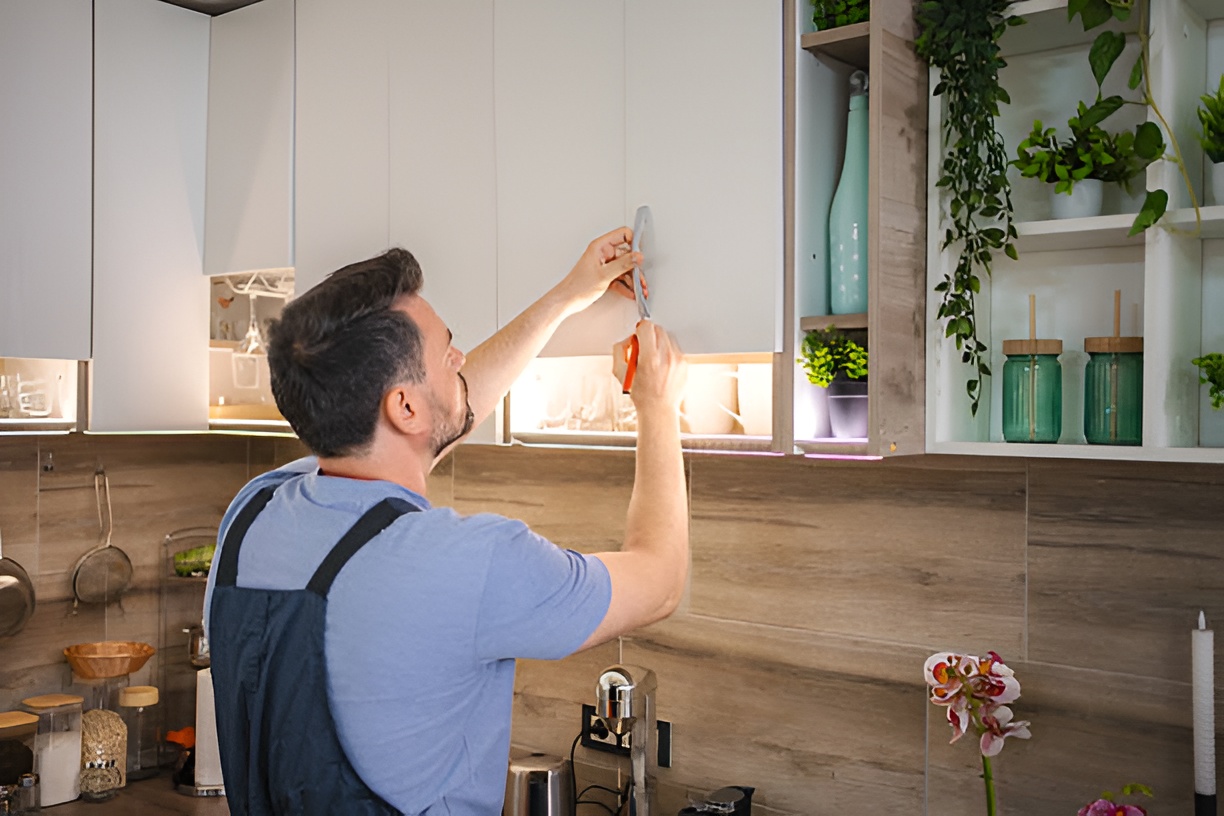
- Proper placement improves functionality: Handles that are too high, too low, or inconsistent can make opening cabinets and drawers awkward or tiring.
- Follow standard heights and orientation: Vertical handles work best on doors, horizontal on drawers, and measurements around 2.5–3 inches from edges create natural, comfortable hand movements.
- Maintain symmetry for a polished look: Use careful measuring, templates, and consistent spacing to ensure handles align across all cabinets and drawers.
- Consider ergonomics: Account for dominant hand use, drawer weight, corner collisions, child accessibility, and overall kitchen workflow for comfortable, practical placement.
- Avoid common mistakes: Inconsistent heights, placement too close to edges, ignoring drawer sizes, and blocking appliances can all reduce functionality and aesthetics.
- Use the right tools for installation: A tape measure, template, level, and proper drill bits ensure accurate and professional handle placement, making DIY installation much easier.
When it comes to kitchen design, handles might seem like a small detail—but they play a huge role in both the look and functionality of your space. Choosing the right handles is one thing, but knowing where to place kitchen cabinet handles can make all the difference. Proper placement ensures your kitchen is not only stylish but also practical and easy to use every day.
In this article, we’ll cover top placement tips, common mistakes to avoid, and guidelines for a kitchen that works for you.
Why Does Handle Placement Matter?
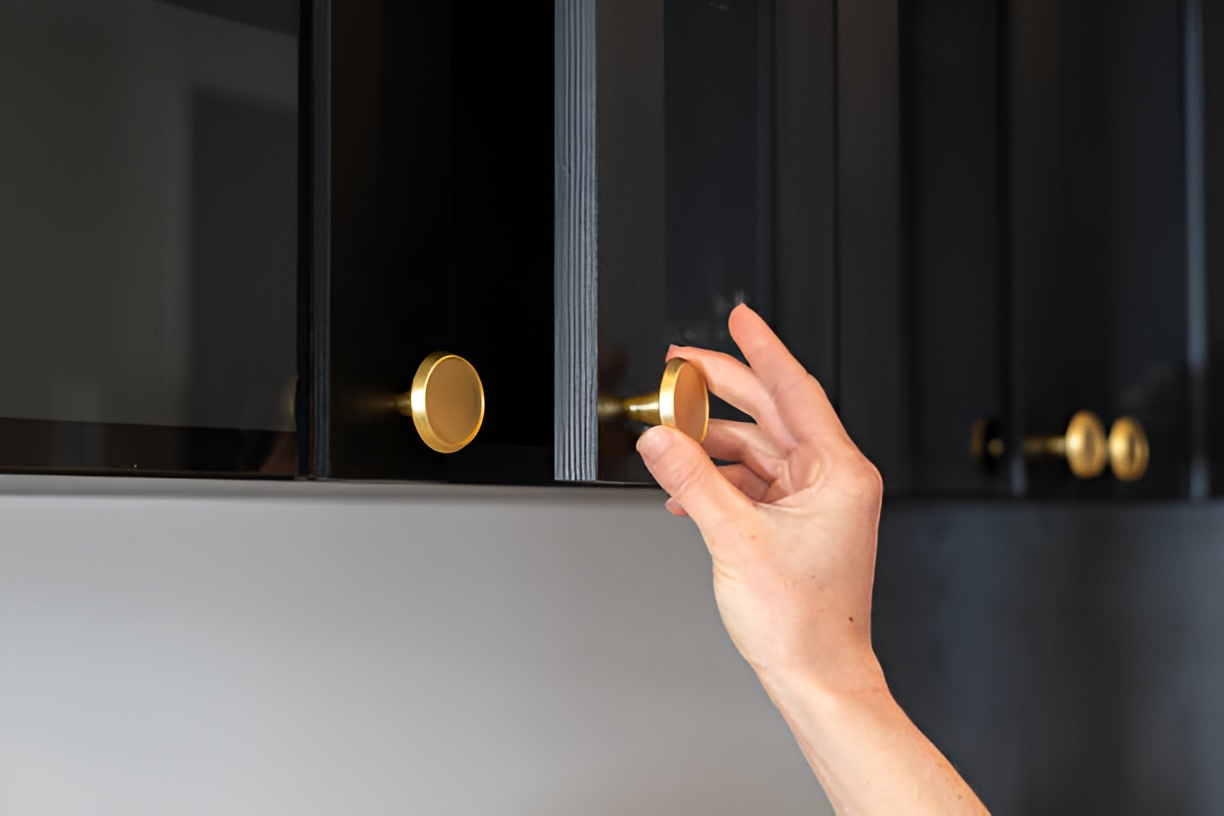
Many homeowners focus on cabinet style, color, and hardware finish, but the placement of handles can affect how comfortable and efficient your kitchen feels. Handles that are too high, too low, or inconsistently positioned can make opening drawers and cabinets awkward and tiring.
Good handle placement helps you:
- Reach cabinets and drawers comfortably.
- Maintain a clean and symmetrical look.
- Avoid accidental bumps or scratches when moving around the kitchen.
- Improve accessibility for kids, elders, or anyone with mobility issues.
What’s the Standard Height for Cabinet Handles?
A common question is: “Where to place kitchen cabinet handles on doors and drawers?” While there’s no one-size-fits-all rule, there are industry standards to guide you.
Cabinet Doors
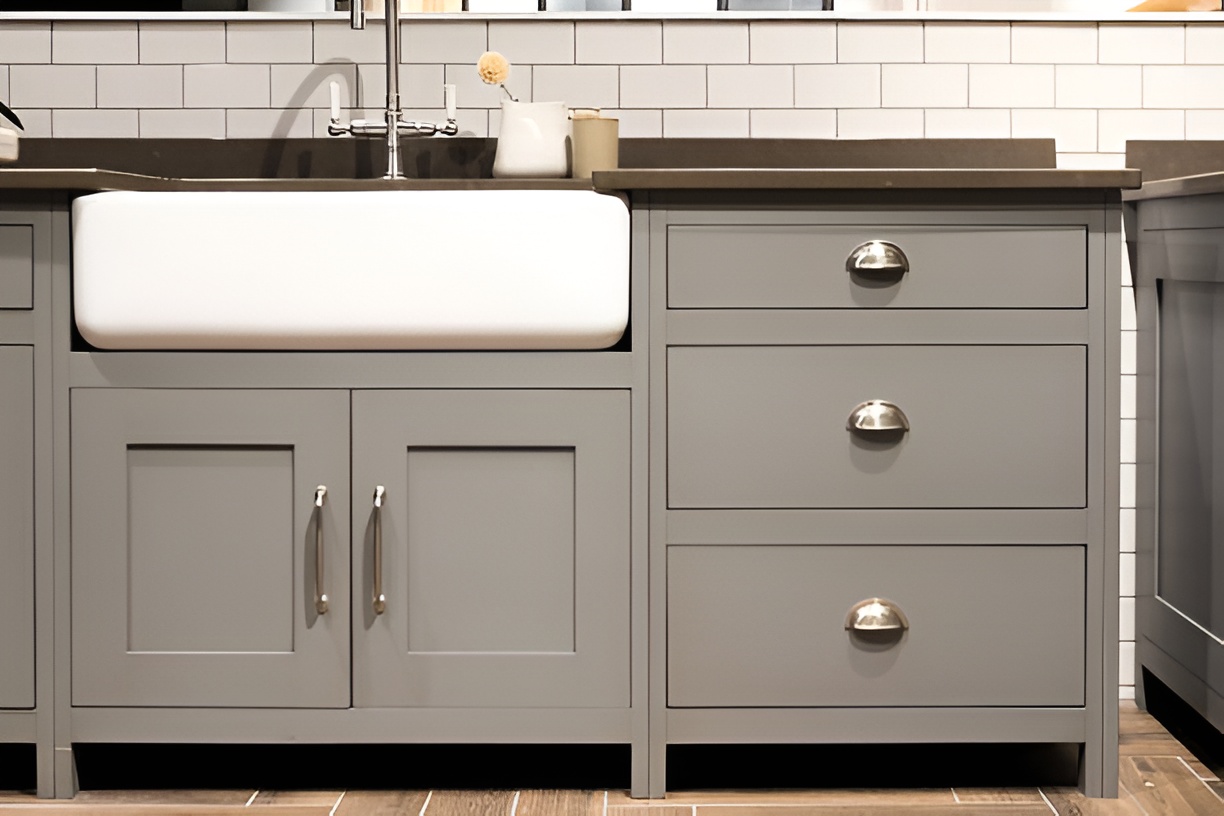
- Base cabinets: Handles are usually placed 2.5 to 3 inches from the top of the door if the handle is vertical, or from the edge if horizontal.
- Wall cabinets: Handles typically go 2.5 to 3 inches from the bottom edge if vertical.
Drawers
- Horizontal handles: Centered vertically and placed near the top edge for easy grip.
- Knobs: Centered horizontally and vertically on smaller drawers.
These measurements create a natural hand movement and prevent strain when reaching for cabinets or drawers repeatedly.
Vertical vs Horizontal Placement: Which Works Best?
When deciding where to place kitchen cabinet handles, you’ll also need to consider orientation: vertical or horizontal.
- Vertical handles: Usually used on cabinet doors. They make taller doors easier to open and add a modern look.
- Horizontal handles: Common for drawers. They align with the natural motion of pulling out a drawer.
Tip: If you prefer a consistent look, keep all handles in the same orientation across the kitchen, but don’t sacrifice function for style. For instance, vertical handles on drawers can look unique but may feel awkward to use.
How to Maintain Symmetry Across Your Cabinets
Symmetry matters in design, and your handles should follow a consistent pattern to maintain balance. Here’s how:
- Measure carefully: Before drilling any holes, use a tape measure to mark precise locations on each cabinet door or drawer. Even a small difference of a few millimeters can throw off the visual balance, so double-check your marks.
- Use a template: A handle placement template is a simple tool that ensures every handle sits in exactly the same spot. Templates are especially useful for large kitchens or when working with multiple types of cabinets, like tall pantries and standard drawers.
- Keep consistent spacing: For wider kitchens or longer runs of cabinets, make sure the distance from the edge of the door to the handle, as well as the spacing between handles, is uniform. Consistency creates a clean, professional look and prevents your eye from noticing irregularities.
- Double-check alignment: Once all handles are marked, step back and visually inspect the cabinets. Sometimes minor adjustments are needed to account for natural variations in wood or drawer fronts.
Even small deviations can make your kitchen look unpolished, so taking the time to measure and double-check placement pays off in the long run.
Tips for Ergonomic Handle Placement
A functional kitchen is all about ease of use. Here are ergonomic tips for where to place kitchen cabinet handles:
- Think about your dominant hand: Most people naturally reach with their dominant hand, so place handles where they can be pulled smoothly without twisting your wrist. For left-handed households, you may need to adjust placement slightly to make sure all handles feel natural.
- Consider drawer weight: Heavy drawers filled with pots, pans, or dishes require handles that provide leverage. Longer handles or even double knobs can make it easier to pull out heavy drawers without straining your hands.
- Avoid corner collisions: Handles shouldn’t hit neighboring cabinets, appliances, or walls when opened. Leave enough clearance so doors swing freely and drawers slide out without obstruction.
- Child-friendly heights: If children often help in the kitchen, consider installing a few handles at a lower height. This allows kids to participate safely without needing stools or climbing.
- Smooth workflow: Think about the kitchen workflow—from prep area to stove to sink. Handles should make it easy to access frequently used cabinets without awkward bending or reaching.
Common Mistakes in Handle Placement
Many kitchens suffer from poor handle placement, which can make your space frustrating to use. Avoid these common mistakes:
- Inconsistent heights: Handles at different heights can look sloppy and make opening doors awkward.
- Too close to edges: Placing handles too close to corners can cause bumps or make doors harder to open.
- Ignoring drawer size: Small drawers need smaller knobs; large drawers benefit from longer handles.
- Overlooking appliances: Make sure handles don’t interfere with fridge, oven, or dishwasher doors.
Creative Ideas for Handle Placement
While function is crucial, there’s room for creativity:
- Offset placement: Slightly off-center handles can give a contemporary, relaxed look.
- Mix knobs and handles: Knobs on smaller doors, handles on larger drawers create visual interest.
- Integrated handles: Recessed or edge handles can streamline modern kitchens.
- High contrast placement: Dark handles on light cabinets can emphasize style while keeping functionality clear.
How to Place Handles on Specialty Cabinets
Specialty cabinets like tall pantries, corner units, and pull-out shelves need extra consideration.
- Tall pantry doors: Place handles slightly lower than mid-height for comfortable reach.
- Corner cabinets: Consider knobs at the far edge or an L-shaped pull to maximize grip.
- Pull-out shelves: Horizontal handles along the top edge allow smooth operation.
Tools and Tips for Accurate Placement
Accurate placement is easier with the right tools. If you’re planning a DIY project, knowing how to install kitchen cabinet handles correctly is key to getting a professional-looking result. Here’s what you’ll need:
- Tape measure and pencil for precise marking.
- Handle placement template to ensure every handle is positioned consistently.
- Level to make sure handles are perfectly straight.
- Drill with the proper bit size to avoid splitting the cabinet wood.
Pro tip: Measure twice and drill once. Small misalignments can be frustrating to fix later, so taking the time to mark carefully will save a lot of hassle. Using a template can make this process much quicker and ensures all your handles are uniform across your kitchen.
How Handle Placement Affects Kitchen Aesthetics
Handles aren’t just functional—they’re a key part of your kitchen’s design. Proper placement can:
- Highlight cabinet lines.
- Create a visually balanced space.
- Complement other fixtures like faucets, lighting, and countertops.
Even the right style handle can look awkward if it’s in the wrong spot. Function and form should always go hand-in-hand.
Final Thoughts: Balancing Function and Style
Deciding where to place kitchen cabinet handles is about finding the sweet spot between functionality and design. By following ergonomic guidelines, measuring carefully, and maintaining consistent placement, you can create a kitchen that’s easy to use and visually appealing.
Remember, handles are more than just hardware—they’re a touchpoint for everyday interactions in your kitchen. Thoughtful placement ensures your kitchen works for you, your family, and your lifestyle.
Whether you’re renovating your kitchen or just swapping handles for a fresh look, taking the time to plan placement will pay off in both comfort and style.