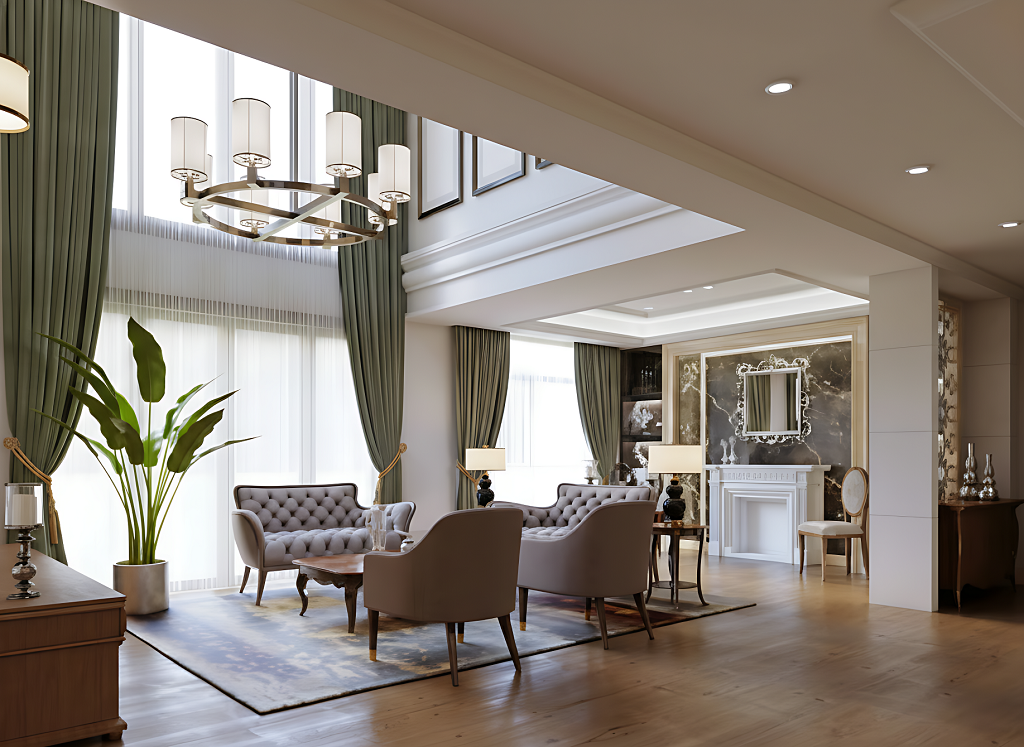
- High ceilings create a grand, airy feel, but without intentional design they can also make the room feel empty, cold, or unbalanced.
- The biggest mistake in a high ceiling living room is leaving vertical space empty, so it’s essential to add height-appropriate design elements like art, shelves, or architectural features.
- Layered lighting is key to coziness, combining a statement chandelier with floor lamps, wall sconces, table lamps, and recessed lighting to create warmth and depth.
- Scale matters for furniture and rugs, so choose larger pieces and a big rug that anchors the seating area and prevents the room from feeling disconnected.
- Vertical interest should be added thoughtfully, using oversized art, tall bookcases, or architectural details while avoiding clutter.
- Color and texture dramatically affect how tall rooms feel, with warm neutrals and deep colors creating coziness, while light tones keep the space open and airy.
- Balance is the most important design principle, achieved through consistent color palettes, symmetry or intentional asymmetry, and one strong statement feature without overcrowding the space.
A high ceiling living room can feel like a dream—airy, grand, and full of potential. But the same height that makes the space feel luxurious can also create a design challenge. Without the right balance, a high ceiling living room can look empty, cold, or oddly proportioned. The good news is that with the right design strategies, you can make your tall room feel cozy, stylish, and perfectly balanced.
This guide is built to help you decorate and design a high ceiling living room that feels intentional, welcoming, and visually stunning. Whether you’re starting from scratch or updating an existing space, this article covers everything you need to know.
Why Do High Ceiling Living Rooms Feel So Grand?

High ceilings create a sense of openness that makes a room feel larger and more luxurious. The extra vertical space draws your eye upward, giving the room a dramatic effect that standard-height rooms can’t match. This is why high ceiling living rooms are often found in historic homes, modern lofts, and luxury properties.
But while high ceilings are visually impressive, they also require more thought when it comes to design. If the space isn’t decorated thoughtfully, it can feel unfinished or too open.
What’s the Biggest Mistake People Make in High Ceiling Living Rooms?
The biggest mistake is leaving the vertical space empty. When your room has so much height, the eye naturally looks upward. If there’s nothing interesting up there, the room can feel incomplete or unbalanced.
Common signs of an unfinished high ceiling living room:
- Furniture looks too small for the space
- Walls feel bare and plain
- The room feels echo-y or cold
- Lighting feels weak or out of place
- The space lacks visual “layers”
The solution is simple: add height-appropriate design elements and focus on creating a balanced layout.
How Do You Make a High Ceiling Living Room Feel Cozy?
Cozy doesn’t mean small. In a tall living room, you can create warmth and intimacy by focusing on scale, texture, and layered design. These strategies help reduce the “echoing” or cavernous feeling that high ceilings can create.
Add Layered Lighting
Lighting is one of the most powerful tools for cozy design. In a high ceiling living room, relying on one overhead light can leave the space feeling cold and uneven. Instead, combine multiple light sources to create a warm, layered glow.
Consider:
- A statement chandelier or pendant light to anchor the room and fill vertical space
- Floor lamps near seating areas for cozy reading light
- Wall sconces to soften harsh shadows and create ambiance
- Table lamps for task lighting and intimate pockets of light
- Recessed lighting to evenly brighten the room without overwhelming the design
Pro tip: Choose warm white bulbs (2700K–3000K) for a soft, inviting glow.
Use Warm Textures and Materials
Tall rooms can feel cold if they’re too minimalist or bare. Add warmth by layering soft textures and natural materials.
Try:
- Plush area rugs to ground the seating area and add softness underfoot
- Soft throw blankets and pillows in natural fibers like wool, cotton, or faux fur
- Cushioned seating with deep, comfortable upholstery
- Wooden furniture to add warmth and organic contrast
- Velvet or linen fabrics for tactile richness
Tip: Mix textures (smooth leather + soft knit + natural wood) to create depth.
Create Defined Zones
A tall room can feel vast and unconnected if the furniture is spread too far apart. Define a clear living area using furniture placement and visual boundaries.
Use:
- A large rug to anchor the seating zone
- A sectional or sofa + chairs arranged in a tight grouping
- A coffee table as a central focal point
- Side tables to keep everything feeling intentional and functional
Add Curtains and Drapes
Floor-to-ceiling curtains emphasize height while adding softness, warmth, and a sense of luxury. The right fabric can transform a tall room instantly.
Choose:
- Heavy fabrics like velvet for a formal, cozy feel
- Linen or cotton for a relaxed, airy vibe
- Drapes that pool slightly at the floor for elegance
Tip: Hang curtains higher than the window to make the ceiling feel even taller and more grand.
How Should You Arrange Furniture in a High Ceiling Living Room?
The key to a great layout is scale. Furniture should match the room’s size and fill space without feeling cluttered.
Furniture Placement Tips
- Place the sofa and chairs close together to create a cozy conversation area
- Avoid pushing everything against the walls—this makes the room feel empty
- Use a large rug to anchor the seating area
- Consider a sectional to naturally fill the space and create comfort
What Size Rug Should You Use?
In a high ceiling living room, bigger is better. A small rug can make the room feel disconnected and empty.
Aim for:
- A rug that fits under the front legs of the sofa and chairs
- A rug that leaves a few inches of floor visible around the edges
- A rug large enough to create a unified seating zone
How Do You Fill Vertical Space Without Overcrowding?
High walls are an advantage, but they can feel intimidating. The goal is to add vertical interest while keeping the room balanced and airy.
Wall Art and Gallery Walls
Large-scale art or gallery walls work beautifully in tall rooms.
Try:
- One oversized statement piece to create instant focus
- A vertical gallery wall to draw the eye upward
- A mix of frame sizes for visual interest
Tall Bookcases and Shelving
Built-in shelves or tall bookcases create height and offer storage.
Consider:
- Styling shelves with books, plants, and decorative items
- Using matching shelves on either side of a fireplace or TV for symmetry
- Adding baskets and boxes to keep clutter hidden
Architectural Features
If you’re renovating, architectural details add depth and richness.
Consider:
- Crown molding
- Ceiling beams
- Paneling or wainscoting
- A feature wall with texture or wood
What’s the Best Lighting for a High Ceiling Living Room?
Lighting is essential in a high ceiling room because the height can create dark areas and harsh shadows. A strong lighting plan includes three layers:
Layered Lighting Strategy
- Ambient Lighting (overall illumination)
- Task Lighting (reading or working)
- Accent Lighting (highlighting art or architecture)
Chandelier or Pendant Options
A chandelier can make a bold statement, but it must be the right size.
Simple formula:
Room width + room length = ideal chandelier diameter (in inches)
Example:
- Room size: 16’ x 20’
- 16 + 20 = 36 inches
- Ideal chandelier: ~36 inches in diameter
How High Should You Hang the Chandelier?
A good rule of thumb:
- The bottom of the chandelier should hang 30–36 inches above the coffee table or seating area
- If the ceiling is extremely high, use a longer chain or rod
How Do You Choose the Right Paint Color for a High Ceiling Living Room?
Color choices dramatically affect how tall rooms feel.
Best Color Strategies
- Warm neutrals create a cozy, inviting vibe
- Deep colors make the room feel grounded
- Light colors make the space feel open and airy
Should You Paint the Ceiling?
Painting the ceiling a slightly darker shade can reduce the sense of height and make the room feel more intimate.
Try: Paint the ceiling 1–2 shades darker than the walls.
What Style Works Best in a High Ceiling Living Room?

High ceilings can support almost any style, but these work especially well:
- Modern Minimalist: Clean lines, large-scale furniture, neutral palette
- Industrial Loft: Exposed beams, metal accents, raw textures
- Traditional Elegance: Chandeliers, crown molding, classic furniture
- Scandinavian Cozy: Light colors, natural wood, soft textiles
How Do You Make a High Ceiling Living Room Feel Balanced?
Balance is key to making a tall room feel complete.
Tips for Balance
- Use large furniture pieces to match the scale
- Add vertical decor to avoid empty walls
- Keep the color palette consistent
- Use symmetry when possible
Symmetry vs Asymmetry
- Symmetry works well in formal, traditional spaces
- Asymmetry creates a modern, relaxed feel
How Do You Add a Statement Feature Without Overdoing It?
A statement feature should be scaled to the room and kept intentional.
Great Statement Ideas
- A large fireplace
- A feature wall with texture or wallpaper
- A tall bookshelf with styling
- A large piece of art
- A dramatic chandelier
Avoid Overcrowding
Choose one main statement piece and keep the rest of the room simple and cohesive.
How Do You Deal With Acoustics in a High Ceiling Living Room?
High ceilings can cause echoing, especially with hard floors.
Simple Acoustic Fixes
- Add a large area rug
- Use upholstered furniture
- Hang heavy curtains
- Add wall hangings or fabric art
These elements absorb sound and make the room feel more comfortable.
How Do You Make a High Ceiling Living Room Look Luxurious?
Luxury is about intentional design—not price.
Luxury Design Tips
- Use large-scale furniture
- Choose high-quality fabrics
- Add metallic accents
- Incorporate symmetry
- Use layered lighting
Even small upgrades like a large mirror or a stylish chandelier can elevate the space.
What Are Some High Ceiling Living Room Layout Ideas?
Classic Conversation Area
- Sofa facing two chairs
- Coffee table in the center
- Rug anchoring the space
Open Concept Layout
- Use a sectional to define the living area
- Add a console table behind the sofa
- Place a rug to separate living and dining zones
Dual Seating Zones
If the room is large enough, create two separate seating areas:
- A main lounge area
- A smaller reading nook or conversation corner
How Do You Choose Curtains for a High Ceiling Living Room?
Curtains are one of the easiest ways to add height and softness.
Curtain Tips
- Hang curtains close to the ceiling, not just above the window
- Choose long curtains that reach the floor
- Use heavy fabric for a formal look
- Use linen or light fabric for a relaxed vibe
Curtain Rod Placement
Mount the rod 4–6 inches above the window frame to make the room feel taller.
What Accessories Work Best in a High Ceiling Living Room?
Accessories are the final touch that brings the room together.
Best Accessories for High Ceilings
- Large mirrors
- Tall plants
- Oversized art
- Sculptural decor
- Decorative ladders
Avoid Clutter
Keep accessories intentional and spaced out. The goal is to fill the space without overcrowding it.
Final Thoughts
A high ceiling living room is a powerful design feature that can make your home feel open, elegant, and modern. The key is balancing the height with large-scale furniture, layered lighting, and vertical decor that adds warmth and visual interest. When you create a cohesive color palette, use textures that soften the space, and add one standout feature, your room will feel both grand and inviting. With the right approach, a high ceiling living room can become the most memorable and comfortable room in your home.